What are you looking for?

How to Choose the Right Fireproof Solution for Lithium Battery Safety
Selecting the right Battery Fire Containment Bag is a critical decision for any organization involved in lithium battery storage, charging, testing, or transportation. As lithium-ion and lithium-polymer batteries continue to power electric vehicles, energy storage systems, drones, and industrial equipment, the risk of battery thermal runaway and fire incidents has become a serious safety concern.
This Buyer’s Guide provides a practical, professional framework to help engineers, safety managers, and procurement teams evaluate and select the most suitable battery fire containment solution based on real-world risks, compliance requirements, and operational needs.
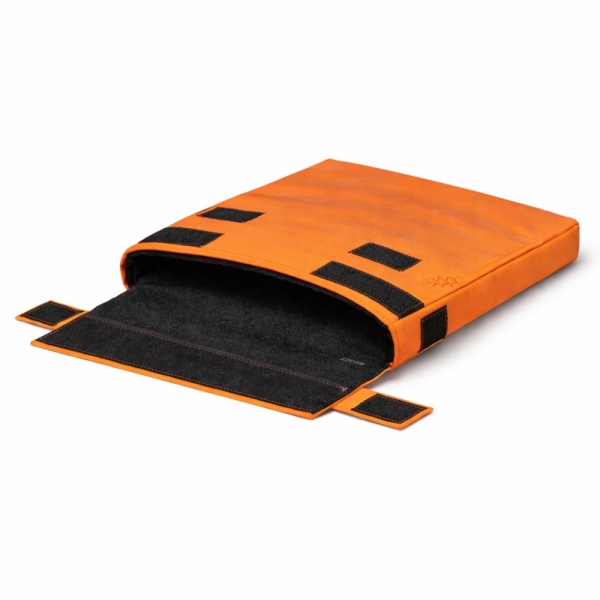
A Battery Fire Containment Bag is a passive fire protection enclosure designed to contain flames, heat, sparks, and smoke generated by lithium battery failure. Unlike traditional fire extinguishers or cabinets, the bag isolates the battery at the source, reducing the risk of fire escalation and secondary ignition.
It is commonly used during:
Battery storage and warehousing
Charging and testing operations
Air and ground transportation
Emergency battery isolation
Many buyers initially consider generic fireproof or heat-resistant bags. However, lithium battery fires present unique challenges:
Extremely rapid temperature rise
High-energy flame jets and molten particles
Toxic and flammable gas release
Potential re-ignition after initial suppression
A true Battery Fire Containment Bag must be specifically engineered to address thermal runaway, not just short-term heat exposure.
The most important criterion is the bag’s ability to withstand and contain extreme temperatures generated during battery failure.
Key aspects to evaluate:
Maximum continuous and peak temperature resistance
Multi-layer fire-blocking construction
Heat insulation effectiveness to protect surroundings
A well-designed containment bag slows heat transfer and maintains structural integrity long enough to prevent escalation.
Not all fire-resistant materials can handle thermal runaway events.
A suitable Battery Fire Containment Bag should:
Contain flame jets and sparks
Prevent flame penetration through seams and closures
Maintain enclosure shape under rapid heat expansion
This is especially critical for high-capacity battery packs and modules.
Battery sizes vary significantly across applications. Choosing the wrong size reduces containment effectiveness.
Consider:
Internal usable dimensions
Clearance for heat expansion
Compatibility with battery packs, modules, or loose cells
Custom sizing is often recommended for industrial and EV battery applications.
High-quality Battery Fire Containment Bags typically use a layered structure, such as:
Outer abrasion-resistant flame-retardant layer
Inner thermal insulation and fire-blocking layers
Reinforced seams and high-temperature closures
Layer composition directly impacts durability and safety performance.
Different use cases require different design priorities.
| Application | Key Requirements |
|---|---|
| Battery Storage | Long-term heat resistance, durability |
| Charging Areas | Fast thermal response, flame containment |
| Transportation | Lightweight, secure closure |
| Aviation | Compact design, compliance-focused |
| Emergency Use | Rapid deployment, clear labeling |
Understanding the primary application helps narrow down suitable designs.
While Battery Fire Containment Bags are often not standalone certified fire suppression devices, they should align with recognized safety practices related to:
Lithium battery transport guidelines
Aviation cargo safety recommendations
Industrial fire prevention standards
Manufacturers should be able to provide material data, test references, and application guidance.
Low-cost disposable bags may appear attractive initially, but often fail after limited exposure.
Evaluate:
Resistance to wear and repeated handling
Structural integrity after heat exposure
Long-term cost per use
Reusable containment bags provide better ROI for professional users.
Selecting a bag based on price alone
Using generic fireproof bags not designed for batteries
Ignoring seam and closure temperature resistance
Choosing undersized bags with no expansion allowance
Overlooking real application scenarios
Avoiding these mistakes significantly improves safety outcomes.
Compact containment bags
Lightweight construction
Easy opening and closing
Reinforced structure
Enhanced insulation layers
Custom internal dimensions
Heavy-duty containment design
Custom fabrication
Multi-layer thermal barrier systems
Standard sizes are not always sufficient. Custom solutions are recommended when:
Battery dimensions are non-standard
Fire exposure risk is elevated
Integration with existing safety systems is required
Industry-specific regulations apply
Custom engineering ensures optimal containment and compliance.
Before placing an order, confirm:
Fire and heat resistance performance
Thermal runaway containment design
Correct sizing and fit
Material structure and durability
Application suitability
Supplier technical support and customization capability
By following this Buyer’s Guide, organizations can make informed decisions that enhance safety, reduce risk, and support responsible battery handling across storage, charging, and transport operations.

No.10, Chuangxin North Road, Nanshan Park, Ningguo Economic and Technological Development Zone, Ningguo City, Anhui Province, China
Tel/Whatsapp : 0086-15856303740
Email : sales@bstbraidedsleeve.com
Skype : vanesa-cheng