What are you looking for?
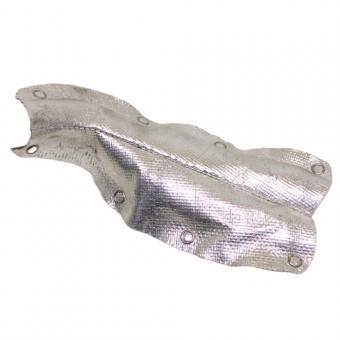
A radiant heat barrier is a type of heat barrier material designed to reduce heat transfer by reflecting thermal radiation away from nearby components. It is most effective when installed with a stable air gap between the heat source and the protected surface.
Radiant heat barriers are widely used in automotive engine bays, underbody heat zones, industrial enclosures, and anywhere sensitive components are exposed to hot surfaces such as exhaust systems, turbo/manifold areas, catalysts, heaters, or hot airflow paths.
Heat moves in three ways: radiation, convection, and conduction. A radiant heat barrier targets radiation—the “heat you feel” from a hot surface without touching it.
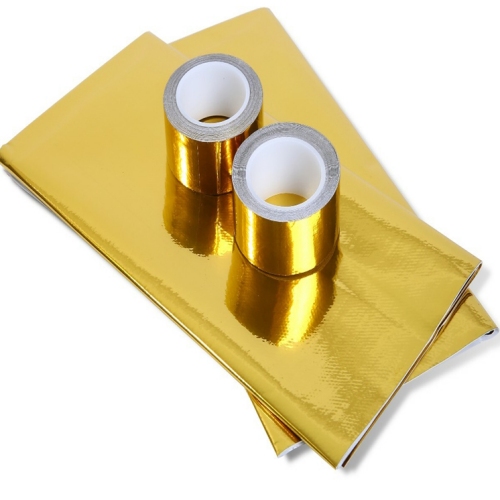
A radiant heat barrier reduces the radiation component by using a reflective facing (commonly aluminum) and/or a composite structure that resists heat transfer. For best results, the barrier should be placed so that it “sees” the hot surface across an air gap, rather than being pressed tightly against it.
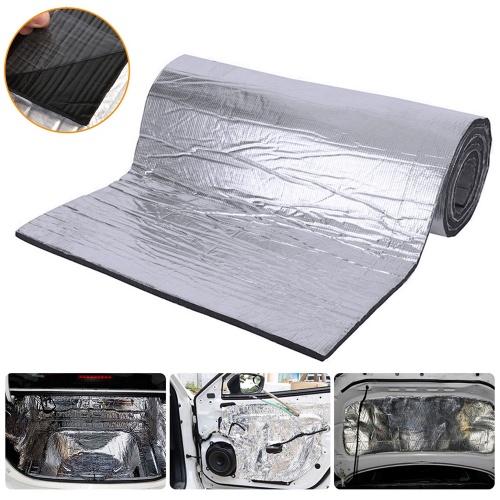
Heat barrier material can be a single-layer reflective sheet or a multi-layer composite. The most common structures include:
An aluminum-facing surface is widely used because it reflects a significant portion of radiant heat. Aluminum heat barriers are often chosen for engine bays, intake heat soak reduction, firewall shielding, and underbody protection.
A heat barrier sheet format is selected when you want coverage over larger surfaces such as panels, bulkheads, housings, or enclosure walls. The best choice depends on clearance, vibration, abrasion risk, and exposure to oils or splash.
A self adhesive heat barrier is ideal for fast installation on clean, stable substrates. Adhesive-backed barriers work well when the surface preparation is correct and the adhesive system is within its temperature limit. In high-vibration areas, mechanical retention or edge control is often recommended.
If you want to review available structures on our website, see: heat barrier material and radiant heat barrier products.
Use the checklist below to avoid the most common selection mistakes:
A radiant heat barrier is a heat barrier material designed to reflect thermal radiation away from nearby components, reducing heat soak and improving reliability.
No. Insulation reduces heat transfer through thickness and trapped air/fiber structures. A radiant heat barrier focuses on reflecting radiant energy, and many products combine both approaches.
Yes. Most radiant heat barriers perform best with a stable air gap. If vibration causes contact, treat it as contact heat and improve retention and edge control.
Use adhesive-backed barriers for fast installation on clean, stable substrates. For high-vibration zones, consider mechanical retention or reinforced edges.
Send photos of the hot zone, clearance, substrate type, target coverage size, and the mounting preference. We can recommend the right structure for your application.
Share your temperature zone, clearance, and mounting method. We will recommend a suitable radiant heat barrier and provide technical documents if required.

No.10, Chuangxin North Road, Nanshan Park, Ningguo Economic and Technological Development Zone, Ningguo City, Anhui Province, China
Tel/Whatsapp : 0086-15856303740
Email : sales@bstbraidedsleeve.com
Skype : vanesa-cheng