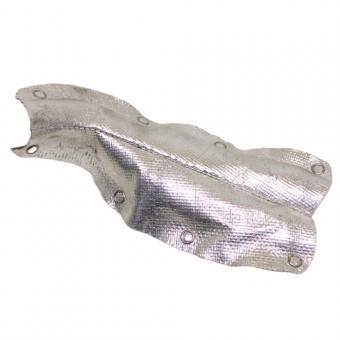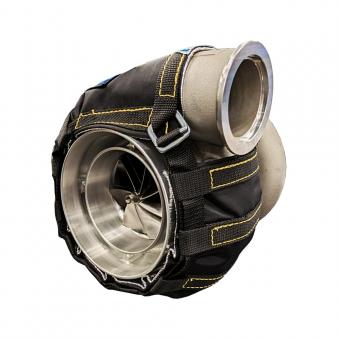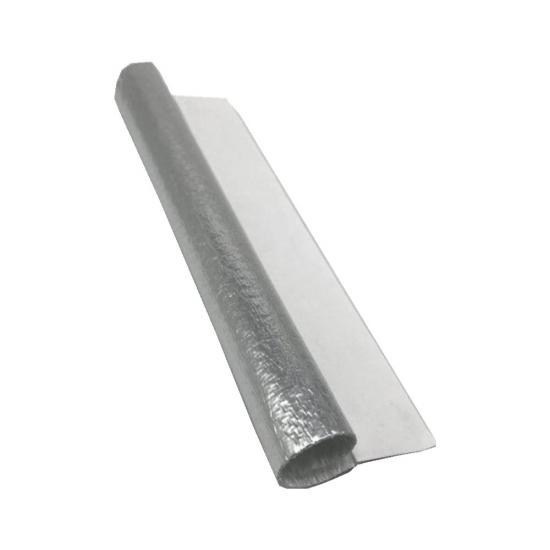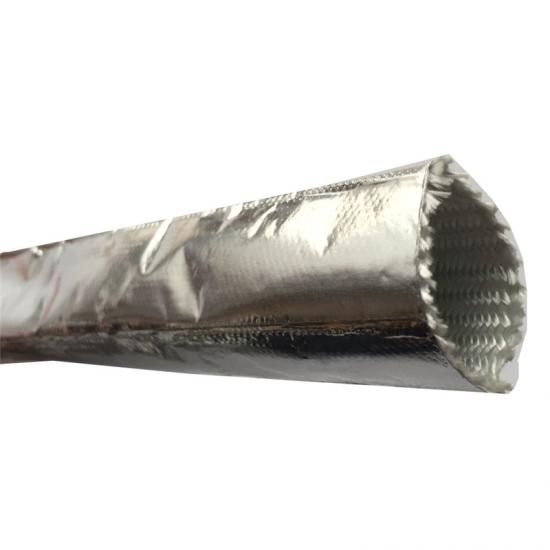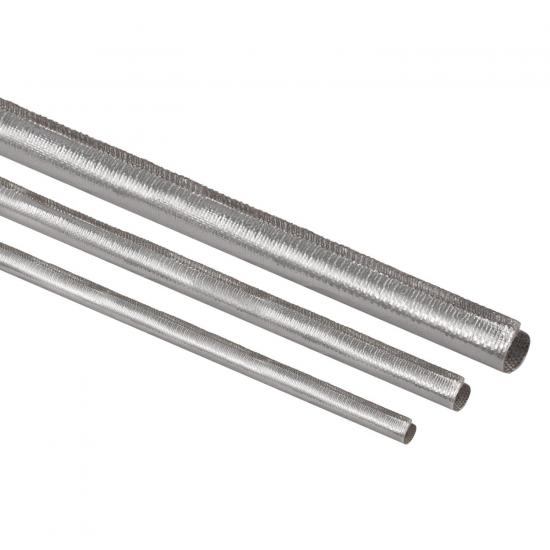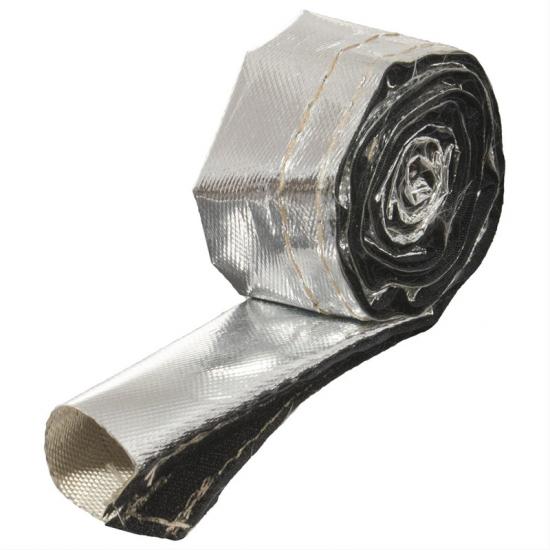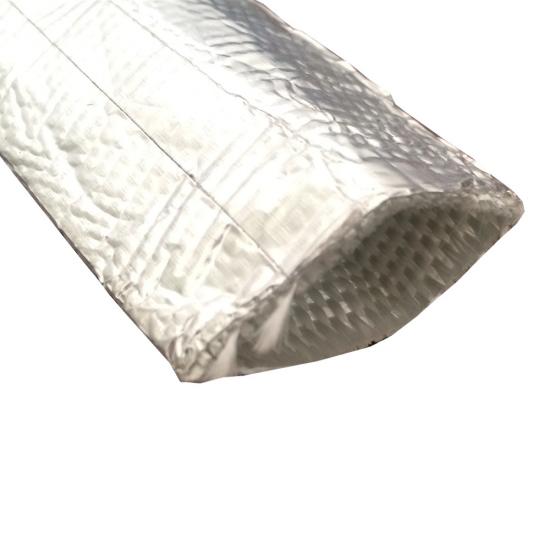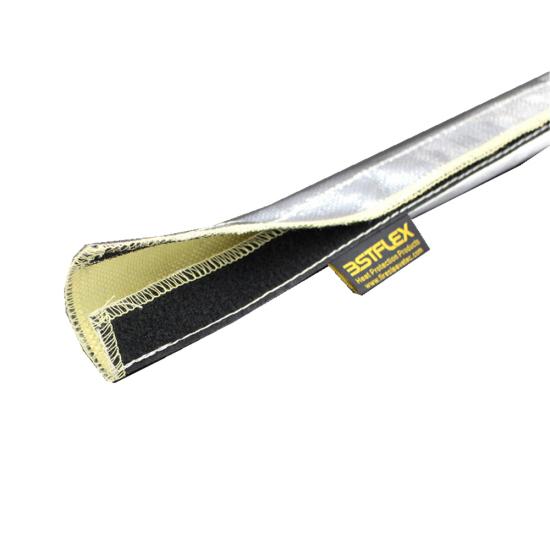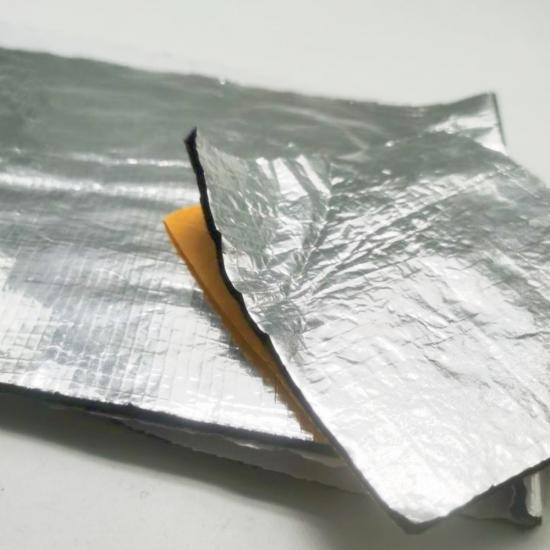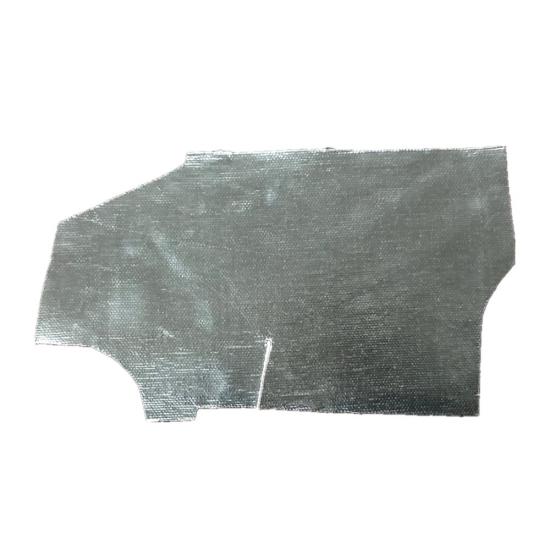
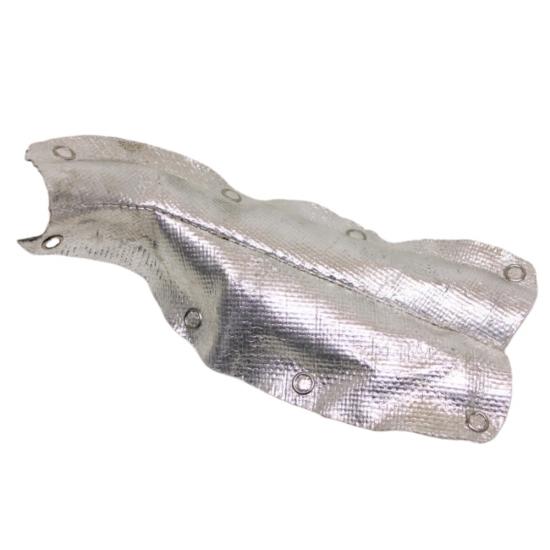
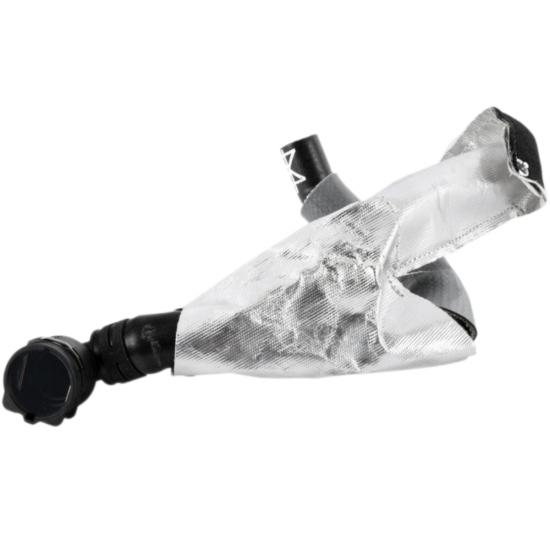
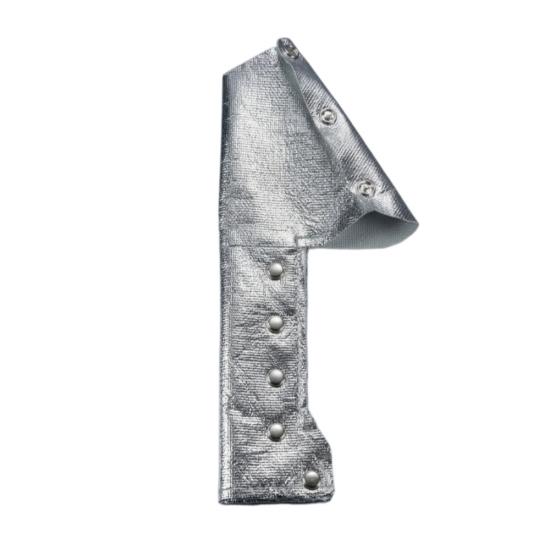
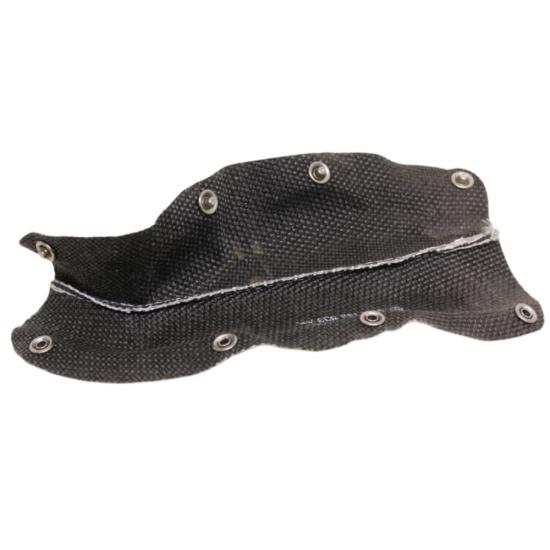
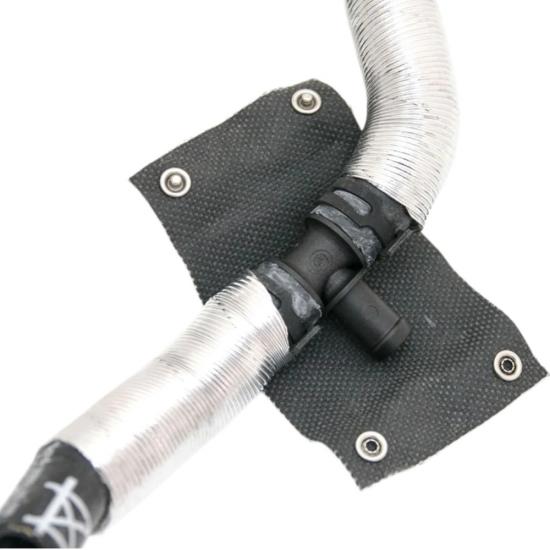
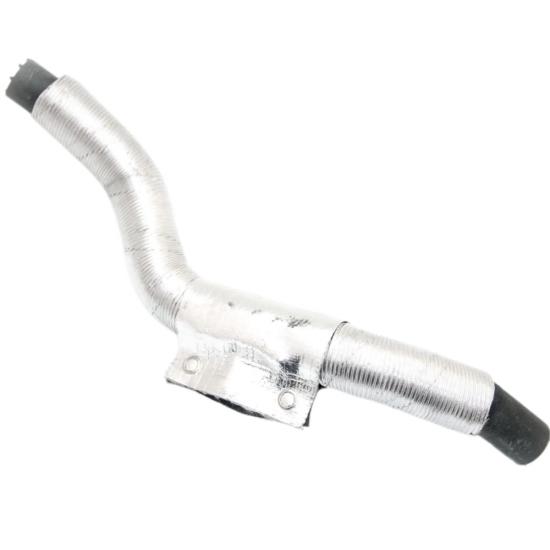
The Custom-Shaped Aluminized Fiberglass Automotive Heat Shield is a flexible thermal protection component manufactured around the geometry of the hose, tube, wire harness, sensor, valve, connector or mechanical assembly that it protects. Unlike a standard straight heat sleeve, each shield can be developed as a flat pattern, folded cover, branch-shaped wrap or fully formed three-dimensional enclosure.
A reflective aluminum outer surface helps reduce radiant heat transfer from exhaust manifolds, turbochargers, EGR systems and other hot engine components. Fiberglass fabric provides structural reinforcement and thermal separation. Additional layers such as fiberglass insulation, pre-oxidized fiber felt or carbonized felt can be incorporated when the application requires increased thermal isolation, cushioning or noise reduction.
BSTFLEX manufactures these custom automotive heat shields from customer drawings, original samples, CAD data or installation measurements. Dimensions, layer construction, fastening method, edge treatment and cutouts can be adapted for OEM production, replacement programs and application-specific thermal management projects.
Component-Specific Flexible Thermal Protection
Modern engine compartments contain heat-sensitive components positioned close to exhaust pipes, turbocharger housings, catalytic converters and exhaust gas treatment systems. A conventional cylindrical sleeve may not fit around branches, connectors, clips, sensors or changes in component diameter.
This custom-shaped automotive heat shield is patterned around those features. Openings can be positioned for electrical connectors, mounting brackets, branches, clips and service points. Fold lines and joining sections allow the finished shield to follow irregular profiles without placing unnecessary pressure on the component underneath.
Depending on the design, the finished part may function as an automotive thermal protection sleeve, a flexible heat shield pad, a snap-on thermal cover or a component-specific insulation cap.
Available Multilayer Constructions
The layer arrangement is selected according to the radiant heat source, available installation space, required flexibility, abrasion exposure and target component temperature. Common constructions include:
| Construction | Typical Layer Arrangement | Recommended Use |
|---|---|---|
| Lightweight reflective shield | Aluminum reflective layer with fiberglass fabric | Applications where radiant heat reflection and low installed weight are priorities |
| Insulated three-layer shield | Aluminum surface, fiberglass fabric and thermal insulation layer | Hoses, wiring and components installed close to concentrated heat sources |
| Felt-backed thermal shield | Aluminum-faced fiberglass with pre-oxidized fiber felt or carbonized felt | Applications requiring additional thermal isolation, cushioning or sound attenuation |
| Double-sided construction | Application-specific outer and inner facings with an insulating core | Complex assemblies requiring protection on both sides or controlled surface contact |
| Coated construction | Aluminum-faced outer layer with an application-specific coated fabric or protected inner surface | Applications requiring improved resistance to fluids, abrasion, fraying or environmental exposure |
Material thickness, weight and number of layers are not fixed. BSTFLEX can develop the construction around the permitted installation envelope and the thermal conditions supplied by the customer.
Two-Dimensional and Three-Dimensional Designs
Two-Dimensional Heat Shields
Flat and lightly folded shields are suitable for protecting one side of a component or separating a hose, cable or plastic part from a nearby radiant heat source. They can be die-cut with slots, mounting holes and shaped edges before being installed with press studs, clips, eyelets or existing vehicle hardware.
Three-Dimensional Heat Shields
Three-dimensional shields are produced by joining multiple cut panels to form a component-specific cover. This construction can accommodate elbows, hose branches, valve bodies, connector housings, changes in diameter and restricted installation spaces. The shield can be supplied as a permanently assembled component or as an openable wrap for installation after the hose or wiring assembly has already been fitted to the vehicle.
Closure and Installation Options
- Stainless steel press studs: allow the shield to be opened, positioned around an installed component and closed without disconnecting the hose or wiring.
- Riveted construction: joins selected sections and reinforces locations exposed to repeated movement or assembly loads.
- Eyelets and mounting holes: provide defined attachment points for clips, springs, ties or existing vehicle fasteners.
- Sewn edges and shaped seams: maintain the required geometry while controlling loose fibers and edge wear.
- Combined fastening systems: use permanent joints in one area and removable closures in another to simplify assembly and servicing.
Fastener type and location are determined during pattern development. The design should provide secure retention while maintaining access to serviceable connectors, clamps and sensors.
Product Specifications
| Product type | Custom-shaped flexible automotive heat shield |
|---|---|
| Primary outer surface | Reflective aluminum foil or application-specific aluminized facing |
| Reinforcement layer | Woven fiberglass fabric |
| Optional insulation | Fiberglass mat, pre-oxidized fiber felt, carbonized felt or other approved insulation materials |
| Configuration | Two-dimensional, folded, wrapped or three-dimensional custom geometry |
| Manufacturing methods | Pattern cutting, die cutting, sewing, folding, riveting and press-stud installation |
| Closure options | Stainless steel press studs, eyelets, rivets, clips or application-specific fasteners |
| Edge treatment | Sewn, folded, bound or reinforced according to the construction |
| Shape | Manufactured to customer drawing, CAD data, sample or installation dimensions |
| Thickness | Customized according to insulation performance and available installation space |
| Temperature rating | Determined by the selected laminate, insulation, thread, fasteners and exposure conditions |
| Production service | Prototype development, sample approval and batch production |
| Typical markets | Passenger vehicles, commercial vehicles, off-highway equipment, agricultural machinery and industrial engines |
Temperature performance must be evaluated as a complete assembly. Continuous ambient temperature, radiant source temperature, distance from the heat source, airflow, contact conditions and exposure time can produce very different results. BSTFLEX selects the laminate and insulation system after reviewing the actual operating conditions.
Typical Automotive Applications
- Engine wiring harnesses and electrical connector assemblies
- Fuel lines, brake lines and fluid transfer hoses
- EGR pipes, EGR hoses and exhaust gas treatment lines
- DEF injector lines and related aftertreatment components
- Vacuum lines and emissions control tubing
- Temperature, pressure and exhaust system sensors
- Plastic valves, tees, couplings and quick connectors
- Turbocharger-adjacent hoses and cable routing
- Components near exhaust manifolds and catalytic converters
- Noise-sensitive assemblies requiring an additional felt layer
Why Use a Custom-Shaped Heat Shield?
Protection for Irregular Geometries
A custom pattern follows branches, elbows and changes in diameter more closely than a standard tubular sleeve. This helps maintain thermal coverage around the areas that are most difficult to protect.
Installation After Component Assembly
A snap-on heat shield can be installed around an existing hose, line or wire harness. This can eliminate the need to disconnect the protected component during vehicle assembly, maintenance or replacement.
Low Weight and Flexible Packaging
The textile-based construction can provide thermal protection without the weight and mounting requirements of a rigid metal shield. It is especially useful where packaging space is limited or where the protected assembly needs some freedom of movement.
Application-Specific Thermal Performance
The reflective facing, fiberglass reinforcement and insulation core can be adjusted independently. This allows the shield to be developed around the required temperature reduction instead of forcing every application to use the same material thickness.
Service Access
Removable closures make it possible to inspect connectors, clamps, sensors and hose surfaces without destroying the heat shield.
Flexible Textile Heat Shield vs Rigid Metal Heat Shield
| Design Consideration | Custom Flexible Heat Shield | Rigid Metal Heat Shield |
|---|---|---|
| Complex hose and wiring geometry | Can wrap closely around branches and irregular assemblies | Usually requires additional clearance and mounting points |
| Installation on an assembled component | Openable designs can be installed without disconnecting the component | Installation may require brackets, bolts or component removal |
| Movement and vibration | Flexible construction can follow limited component movement | Requires sufficient clearance to prevent contact and vibration noise |
| Weight | Generally lightweight | Dependent on alloy, thickness and formed geometry |
| Impact resistance | Suitable for protected locations and flexible assemblies | Usually preferred where substantial mechanical impact protection is required |
| Customization | Patterns, layers and fasteners can be changed for individual components | Often requires dedicated forming and stamping tooling |
The two technologies are not interchangeable in every application. A flexible aluminized fiberglass heat shield is normally selected for hoses, lines, wiring, sensors and irregular component assemblies. A rigid metal heat shield may be more appropriate when structural stiffness, impact resistance or a defined air gap is required.
OEM Design and Development Process
- Application review: provide the heat source, component to be protected, installation space, exposure duration and target temperature.
- Geometry review: submit a drawing, CAD file, physical sample, paper pattern or clear installation measurements.
- Material selection: BSTFLEX recommends the reflective facing, fiberglass reinforcement, insulation core, thread and closure system.
- Prototype production: an initial sample is cut, sewn and assembled for fitment evaluation.
- Fit and performance confirmation: the customer checks installation clearance, closure position, component access and thermal performance.
- Production approval: the final pattern, materials and workmanship requirements are recorded for repeat production.
Information Required for a Custom Heat Shield Quote
To prepare an accurate recommendation and quotation, please provide as much of the following information as possible:
- Drawing, CAD file, physical sample or required finished dimensions
- Description or photograph of the protected component
- Radiant heat source and approximate distance from the shield
- Continuous and peak ambient temperatures
- Maximum permitted temperature of the protected component
- Available installation clearance
- Preferred removable or permanent fastening method
- Required resistance to oil, fuel, water, abrasion or vibration
- Prototype quantity and estimated annual demand
- Applicable test standards or customer specifications
Custom Manufacturing by BSTFLEX
BSTFLEX develops flexible automotive thermal protection products for OEM manufacturers, system suppliers, engineering companies and replacement-part distributors. Products can be manufactured from approved drawings or reverse developed from an original sample when drawing data is unavailable.
Custom services include material lamination, pattern development, precision cutting, sewing, edge reinforcement, press-stud installation, eyelet placement, riveting, prototype production and special packaging. Private-label and customer-specified packaging options are available for qualified production programs.
Explore additional aluminized heat protective sleeves , compare our standard heat reflective sleeve with snap closure , or review the die-cut heat reflective mat for flat thermal barrier applications.
Frequently Asked Questions
What is a custom-shaped aluminized fiberglass automotive heat shield?
It is a flexible multilayer thermal barrier cut and assembled to fit a specific automotive component. It combines a reflective aluminum surface with fiberglass reinforcement and can include additional insulation layers.
Is this product a sleeve, pad or heat shield cover?
The final classification depends on its geometry. It may be produced as a wrappable sleeve for a hose, a flat or folded pad for localized shielding, or a three-dimensional cover for a valve, sensor, connector or branched assembly.
Can the shield be installed without disconnecting the hose or wire harness?
Yes. A design using stainless steel press studs or another openable fastening system can be installed after the protected component has been assembled.
Can BSTFLEX manufacture from an original sample?
Yes. Development can begin from an original part, drawing, CAD file, physical template or detailed installation measurements. A prototype should be approved before batch production.
What insulation materials can be added?
Available options include fiberglass insulation, pre-oxidized fiber felt, carbonized felt and other application-specific thermal materials. The correct choice depends on temperature, thickness, flexibility and environmental requirements.
Can holes, slots and cutouts be included?
Yes. The pattern can include openings for hose branches, electrical connectors, mounting clips, sensors, bolts and service points. Their locations should be defined on the drawing or confirmed during sample fitting.
What temperature can the heat shield withstand?
There is no single temperature rating for every construction. The final rating depends on the aluminum facing, fiberglass substrate, insulation core, adhesive or lamination system, sewing thread, fasteners and duration of exposure. Provide both continuous and peak conditions for material selection.
Is this an exhaust heat shield?
It normally protects heat-sensitive components from nearby exhaust heat rather than insulating the exhaust pipe itself. Typical protected components include hoses, wire harnesses, fuel lines, EGR lines, DEF lines, sensors and plastic connectors.
Can coatings be added to the construction?
Yes. Application-specific coated fabrics or protected inner surfaces can be evaluated when resistance to fluids, abrasion, contamination or edge fraying is required. The coating must be selected according to the operating temperature and exposure conditions.
Can you supply prototypes before mass production?
Yes. Prototype production is recommended for checking fit, installation sequence, fastener position, service access and thermal performance before the product is approved for repeat manufacturing.
Request a Custom Heat Shield
Send BSTFLEX your drawing, sample, operating temperature, heat-source information and estimated quantity. Our team will review the geometry, recommend a suitable multilayer construction and prepare a component-specific solution for prototype or production requirements.