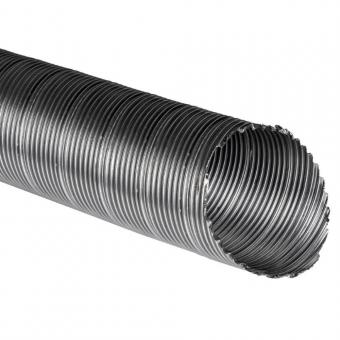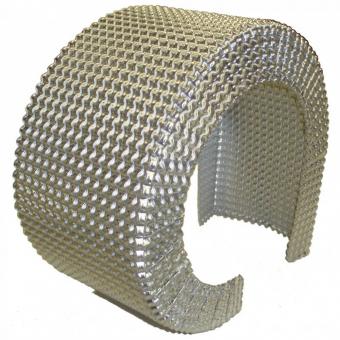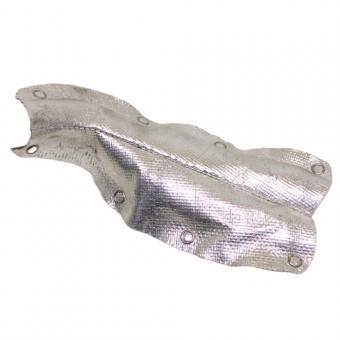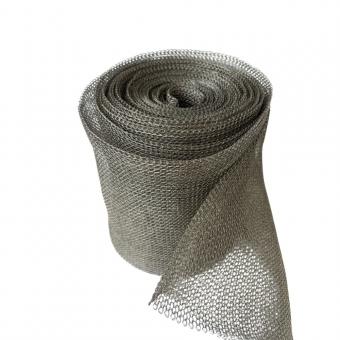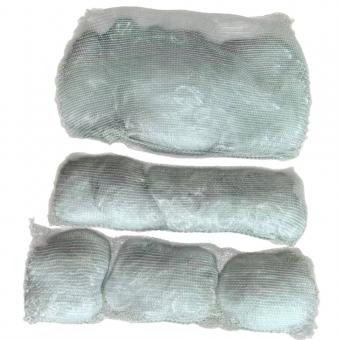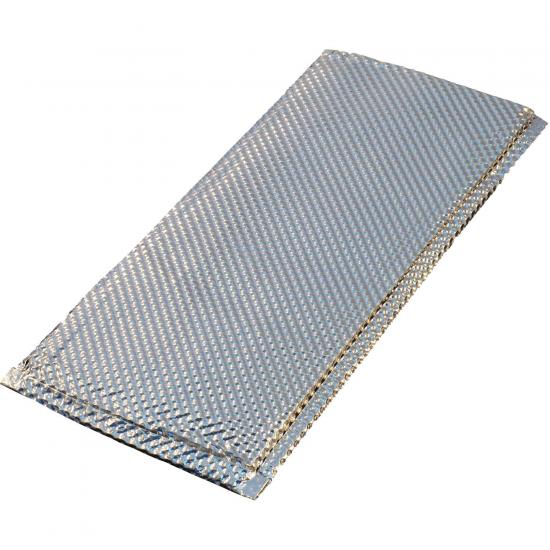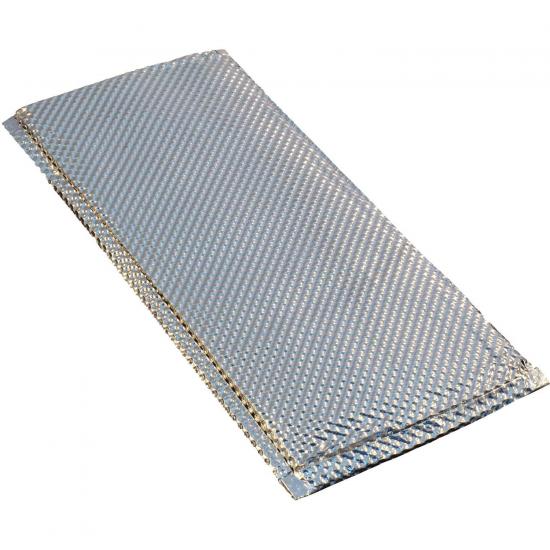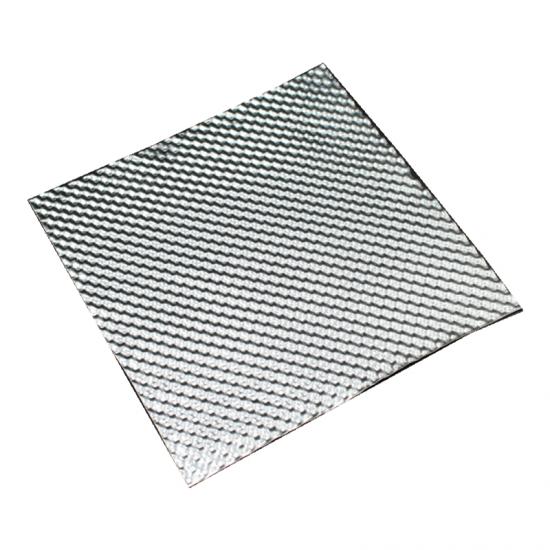
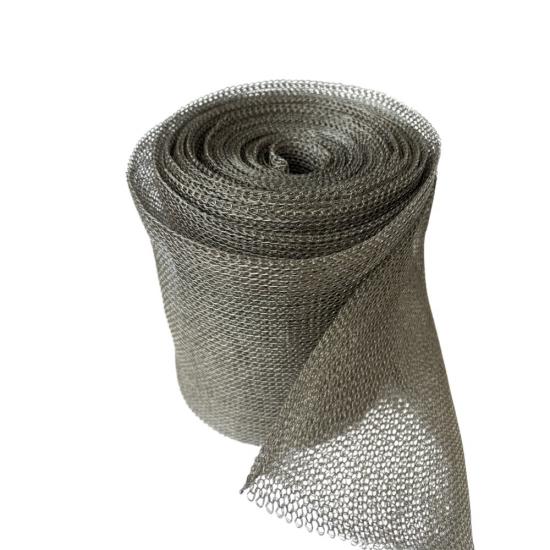
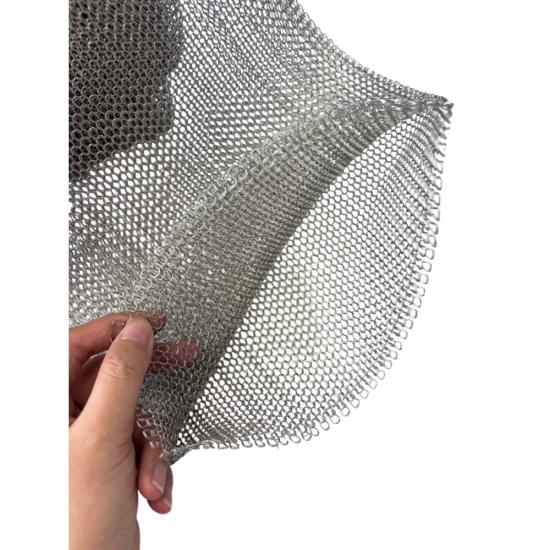
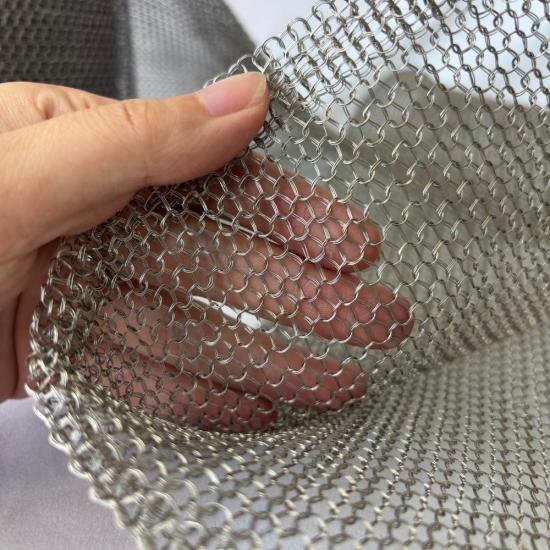
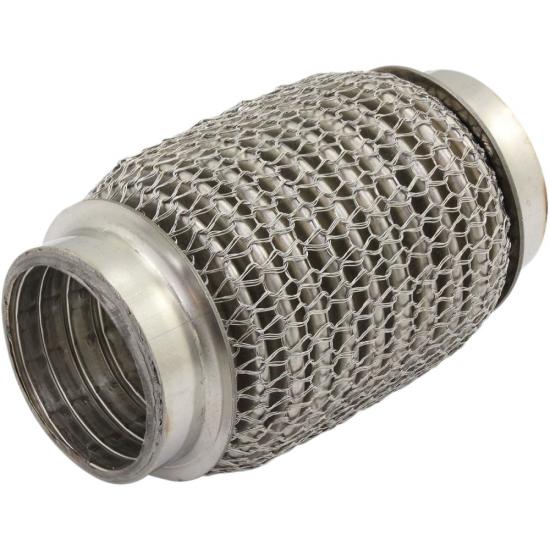
BSTFLEX manufactures stainless steel knitted wire mesh sleeves for automotive exhaust bellows, flexible exhaust pipes, exhaust decouplers and other flexible exhaust connection assemblies.
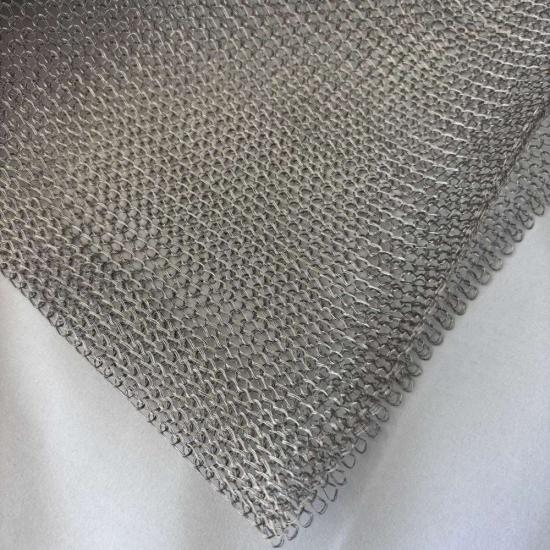
The sleeve is produced by knitting stainless steel wire into a tubular loop structure. Compared with rigid woven mesh, the knitted construction can compress, stretch and conform around bellows and flexible exhaust components while maintaining a continuous metallic structure.
For selected exhaust applications, three stainless steel wires can be fed into the knitting process at the same time. This triple-wire knitted construction creates a heavier multi-strand mesh with more metallic contact points and can be customized according to the mechanical requirements of the exhaust assembly.
Product Overview
Exhaust bellows and flexible exhaust pipes are designed to accommodate vibration, thermal expansion, engine movement and repeated mechanical displacement. The knitted wire mesh sleeve works as a flexible metallic layer around or within the exhaust flex assembly.
Depending on the exhaust system design, knitted stainless steel mesh can be installed directly around the bellows, positioned beneath an external stainless steel braid, or integrated into an exhaust decoupling structure.
Its looped construction allows the mesh to move together with the bellows rather than acting as a rigid cover. This makes it suitable for applications that require vibration management, surface protection, flexible support and mechanical separation between metallic layers.
Triple-Wire Knitted Construction
One of the main manufacturing options available from BSTFLEX is triple-wire knitting.
In this construction, three stainless steel wires are supplied in parallel and knitted together into the same tubular mesh structure. The three wires form each knitted loop simultaneously.
Compared with a similar single-wire construction, triple-wire knitted mesh contains more metallic material in the same knitted structure. This can change the weight, stiffness, compression characteristics and wire-to-wire contact behavior of the finished sleeve.
The number of wires is only one design factor. Wire diameter, mesh density, sleeve diameter, stainless steel grade and installation position must also be considered when selecting the correct mesh.
How Knitted Wire Mesh Is Used in Exhaust Bellows
Exhaust bellows are subjected to continuous vibration and thermal movement during engine operation. The bellows must remain flexible while compensating for movement between the engine and downstream exhaust system.
A knitted wire mesh sleeve can be fitted around the bellows to provide a flexible metallic interface. The mesh can deform with the bellows and maintain contact during repeated movement.
Depending on the assembly design, the knitted mesh may help reduce direct rubbing between the bellows and surrounding metallic components. It can also create many wire-to-wire contact points that contribute to mechanical damping.
Applications in Flexible Exhaust Pipes
Flexible exhaust pipes are commonly used where rigid exhaust tubing cannot accommodate engine movement, thermal expansion and vibration.
A flexible exhaust pipe may include a corrugated bellows, inner liner, outer braid and knitted wire mesh. The exact construction varies according to the exhaust system manufacturer.
The knitted mesh can be positioned around the bellows or between the bellows and an external braid. Its purpose depends on the complete flex pipe design.
BSTFLEX supplies custom knitted mesh sleeves according to the outside diameter of the bellows, the required sleeve diameter and the mechanical requirements of the finished flexible connection.
Exhaust Decoupler Applications
Automotive exhaust decouplers are designed to reduce the transfer of engine vibration and movement into the downstream exhaust system.
Knitted stainless steel mesh can be incorporated into exhaust decoupling assemblies because the looped structure permits controlled movement while creating multiple frictional contact points between the wires.
The correct mesh construction depends on the decoupler design, required flexibility, installation position and expected movement range.
Knitted Wire Mesh Compared with Stainless Steel Braid
Knitted wire mesh and stainless steel braid are different products and should not be treated as identical components.
Knitted mesh is formed from interconnected wire loops. Stainless steel braid is produced by crossing multiple wire carriers diagonally.
Knitted mesh is generally more compressible and conformable, while braid is often used as an external restraint or reinforcing layer.
Some exhaust flex pipe designs use both knitted mesh and stainless steel braid in the same assembly because the two structures provide different mechanical functions.
Custom Wire Diameter
Wire diameter has a direct influence on the behavior of the finished knitted mesh.
A larger wire diameter generally increases mesh weight and stiffness. A finer wire can provide a lighter and more flexible structure.
Wire diameter can also affect compression resistance, loop flexibility, metallic contact area and finished sleeve thickness.
For this reason, the wire diameter should be selected together with the mesh density and number of strands rather than as an isolated specification.
Custom Mesh Density
Mesh density controls how much stainless steel wire is incorporated into a given area or length of the knitted sleeve.
A denser mesh contains more metallic material and more contact points between the wires. A more open mesh normally provides greater flexibility and lower weight.
Different exhaust bellows and flex pipe designs may require different mesh densities. BSTFLEX can adjust the knitting construction according to customer samples, drawings or engineering requirements.
Custom Sleeve Diameter
The tubular knitted wire mesh sleeve can be produced in different diameters to match exhaust bellows, flex pipes and decoupling components.
The correct sleeve diameter is important for assembly performance. A sleeve that is too tight may restrict movement, while a sleeve that is too loose may not provide the required mechanical interaction.
For OEM development, customers are encouraged to provide the bellows outside diameter, required mesh diameter and finished sleeve length.
Available Materials
Stainless steel is commonly used for exhaust knitted mesh because it provides corrosion resistance, mechanical durability and suitability for high-temperature exhaust environments.
Typical material options include 304 and 316 stainless steel. Other stainless steel grades or high-temperature alloy wires can be evaluated according to customer specifications.
Material selection should consider operating temperature, oxidation conditions, road salt exposure, condensation, service life and the installation position within the exhaust system.
Technical Specifications
| Product | Stainless Steel Knitted Wire Mesh Sleeve |
|---|---|
| Construction | Tubular knitted wire mesh |
| Wire Configuration | Single-wire or multi-wire construction |
| Featured Construction | Triple-wire knitted mesh |
| Material | Stainless steel |
| Typical Grades | 304, 316 or custom grade |
| Reference Sleeve Diameter | 25 mm to 150 mm, custom sizes available |
| Reference Wire Diameter | 0.15 mm to 0.30 mm, custom options available |
| Mesh Density | Custom |
| Mesh Layers | Single or multiple layers according to design |
| Length | Cut length or continuous production |
| Applications | Exhaust bellows, flex pipes, exhaust decouplers and flexible exhaust joints |
| OEM Service | Available |
| Sample Development | Available |
Typical Applications
- Automotive exhaust bellows
- Flexible exhaust pipes
- Automotive exhaust decouplers
- Exhaust flexible joints
- Commercial vehicle exhaust systems
- Heavy-duty truck exhaust systems
- Generator exhaust connections
- Industrial engine exhaust piping
- Marine exhaust assemblies
- Muffler and silencer mesh applications
OEM and Custom Manufacturing
BSTFLEX manufactures knitted wire mesh sleeves according to customer drawings, samples and exhaust component dimensions.
Custom production can include different stainless steel grades, wire diameters, strand quantities, sleeve diameters, mesh densities and finished lengths.
For replacement projects, customers can also provide an existing knitted mesh sleeve or complete exhaust component for evaluation.
This sample-based development method is useful when the original mesh specification is unavailable but the customer needs to reproduce the existing construction.
Information Required for Quotation
| Application | Exhaust bellows, flex pipe, decoupler or flexible joint |
|---|---|
| Bellows Outside Diameter | Required |
| Mesh Sleeve Diameter | Required |
| Finished Length | Required |
| Wire Material | 304, 316 or specified grade |
| Wire Diameter | Required if specified |
| Number of Wire Strands | Single, double, triple or custom |
| Mesh Density | Drawing, specification or sample |
| Quantity | Pieces or meters |
| Drawing or Sample | Recommended |
Why Choose BSTFLEX
BSTFLEX focuses on custom thermal and mechanical protection components for automotive and industrial applications.
For stainless steel knitted mesh projects, we can support drawing-based production, sample-based development, custom wire configurations and OEM manufacturing.
Triple-wire knitted construction is available for customers requiring three stainless steel wires to be knitted together into the same tubular mesh structure.
If you are developing an exhaust bellows, flexible exhaust pipe or automotive exhaust decoupler, send us your technical drawing or sample for evaluation.
Frequently Asked Questions
What is a stainless steel knitted wire mesh sleeve?
It is a tubular metallic sleeve made by knitting stainless steel wire into interconnected loops. The resulting structure is flexible, compressible and suitable for installation around exhaust bellows and flexible exhaust components.
What is knitted wire mesh used for in an exhaust system?
It is commonly used around exhaust bellows, flex pipes and exhaust decouplers where a flexible metallic layer is required for vibration management, surface protection and mechanical support.
What is triple-wire knitted mesh?
Triple-wire knitted mesh is manufactured by feeding three stainless steel wires together during the knitting process so that the three wires form the knitted loop structure simultaneously.
Is knitted wire mesh the same as stainless steel braid?
No. Knitted mesh is formed from wire loops, while braid is produced from diagonal crossing wire carriers. Some exhaust assemblies use both products for different functions.
Can the sleeve diameter be customized?
Yes. Sleeve diameter can be produced according to the dimensions of the exhaust bellows, flex pipe or decoupling component.
Can the mesh density be customized?
Yes. Mesh density, wire diameter, strand quantity and sleeve diameter can be adjusted according to the required exhaust assembly.
Can BSTFLEX manufacture from an existing sample?
Yes. Customers can provide an existing mesh sleeve, exhaust bellows assembly or flex pipe sample for dimensional and construction evaluation.
Request a Quote
For custom stainless steel knitted wire mesh sleeves, please provide the application, sleeve diameter, wire diameter, stainless steel grade, number of wire strands, mesh density, finished length and required quantity.
Drawings and existing samples are welcome for OEM development.
Stainless Steel Knitted Wire Mesh Sleeve for Exhaust Bellows and Flex Pipes