What are you looking for?

Modern vehicles operate under increasingly demanding thermal conditions. Higher engine outputs, compact engine bays, turbocharged systems, and complex electronic architectures all contribute to elevated temperatures and tighter packaging constraints.
As a result, automotive manufacturers and tier suppliers must carefully manage heat exposure around critical components such as wiring harnesses, oil lines, fuel hoses, and control cables. Failure to adequately protect these components can lead to insulation breakdown, fluid degradation, electrical faults, and reduced service life.
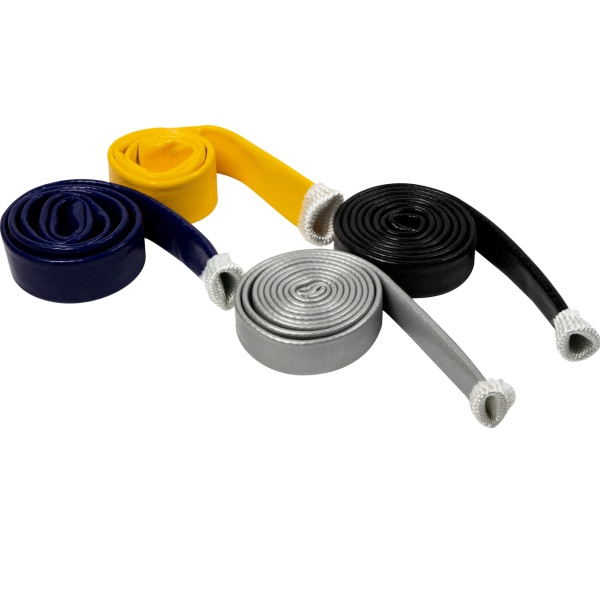
Among the available thermal protection solutions, black silicone coated heat sleeve has become one of the most widely adopted options across passenger vehicles, commercial trucks, and performance platforms.
In automotive applications, material performance alone is not enough. Components must also meet durability, cleanliness, appearance, and long-term reliability requirements.
Black silicone coated heat sleeves offer several advantages that make them particularly suitable for vehicle environments.
The silicone coating provides a sealed, non-porous surface that resists oil, fuel, coolant, and road contaminants. This is critical in engine compartments where fluid misting and splash exposure are common.
The black outer surface is also favored by automotive OEMs because it maintains a clean, uniform appearance over time. Unlike lighter-colored materials, black silicone coatings are less prone to visible staining or discoloration, even after prolonged exposure to heat and fluids.
In addition, black silicone coated heat sleeves integrate visually with surrounding hoses, wiring looms, and under-hood components, making them a natural choice for production vehicles.
Automotive wiring harnesses are increasingly dense and complex, often routed close to hot engine components, exhaust manifolds, and turbochargers.
Black silicone coated heat sleeves are commonly installed over wire bundles to reduce radiant heat exposure and protect insulation materials from thermal aging. The silicone coating also adds abrasion resistance, preventing damage caused by vibration, movement, or contact with sharp edges.
In hybrid and electric vehicle platforms, heat sleeves play an additional role by stabilizing cable temperatures near power electronics and thermal management systems, contributing to consistent electrical performance.
Oil lines and fluid hoses are particularly sensitive to elevated temperatures. Excessive heat can thin lubricants, degrade seals, and reduce hose integrity over time.
Black silicone coated heat sleeves are widely used to protect oil lines, transmission hoses, and hydraulic circuits routed near hot engine components. By limiting radiant heat transfer, the sleeve helps maintain stable fluid temperatures and reduces the risk of premature hose failure.
The silicone coating also prevents oil saturation of the insulation layer, ensuring that thermal performance remains consistent even in environments with persistent fluid exposure.
Automotive hoses are subject to continuous movement, vibration, and pressure fluctuations. In addition to thermal stress, they must withstand abrasion and mechanical wear.
Silicone coated heat sleeves provide a flexible protective layer that moves with the hose without cracking or delaminating. This flexibility is especially important in steering systems, turbocharger plumbing, and auxiliary fluid circuits.
The combination of heat resistance and mechanical durability makes black silicone coated heat sleeves a reliable solution for both OEM installations and aftermarket upgrades.
Modern vehicles rely on numerous sensors for engine management, emissions control, and safety systems. Sensor cables are often routed through high-temperature zones where unprotected exposure can lead to signal degradation or failure.
Black silicone coated heat sleeves help stabilize operating temperatures around sensor lines while shielding them from oil mist, dirt, and vibration. This contributes to improved signal reliability and reduced diagnostic issues over the vehicle’s service life.
Beyond standard passenger vehicles, black silicone coated heat sleeves are extensively used in performance, motorsport, and heavy-duty automotive platforms.
Turbocharged engines, high-performance exhaust systems, and racing environments generate intense radiant heat. Silicone coated heat sleeves are commonly applied to protect wiring, hoses, and control cables in these extreme conditions.
In commercial trucks and off-road vehicles, the sleeves must also withstand long duty cycles, harsh environments, and limited maintenance access, further reinforcing the value of silicone-coated designs.
From an assembly standpoint, black silicone coated heat sleeves are easy to integrate into existing vehicle designs. They can be installed during hose assembly, wire harness fabrication, or final vehicle assembly.
The flexible construction allows the sleeve to follow complex routing paths without affecting fitment. Standard retention methods such as clamps or ties ensure secure positioning throughout the vehicle’s operational life.
Automotive engineers prioritize solutions that balance thermal performance, durability, manufacturability, and cost. Black silicone coated heat sleeves meet these criteria by offering reliable heat protection, long service life, and compatibility with automotive production standards.
Their proven performance across wires, oil lines, cables, and hoses makes them a preferred thermal protection solution in modern vehicle design.
BSTFLEX manufactures black silicone coated heat sleeve engineered for automotive and industrial applications. Designed to perform under sustained heat, vibration, and fluid exposure, these sleeves support long-term reliability in demanding vehicle environments.
With customization options for size, thickness, and application requirements, BSTFLEX silicone coated heat sleeves are suitable for OEM production, aftermarket solutions, and specialized automotive systems.

No.10, Chuangxin North Road, Nanshan Park, Ningguo Economic and Technological Development Zone, Ningguo City, Anhui Province, China
Tel/Whatsapp : 0086-15856303740
Email : sales@bstbraidedsleeve.com
Skype : vanesa-cheng