What are you looking for?
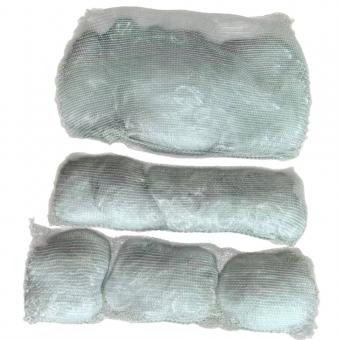
Muffler packaging material, often called muffler packing or sound deadening mat, reduces noise through a principle called sound absorption. It's a key component in many types of mufflers, especially glasspack, straight-through, and performance motorcycle mufflers.

Here’s a detailed breakdown of how it works:
The primary job of the packing material is to absorb the acoustic energy of the sound waves coming from the exhaust gases and convert that energy into a tiny, negligible amount of heat.
The process involves several key mechanisms:
Porous Absorption: High-quality packing materials like fiberglass or rock wool are incredibly fibrous and porous. As sound waves enter the muffler chamber and try to pass through this dense, matted web of fibers, the air molecules are forced to vibrate rapidly within the tiny pores and passages.
Friction and Resistance: This rapid vibration causes the air molecules to rub against the countless tiny fibers of the packing material. This friction resists the motion of the sound waves, robbing them of energy.
Energy Conversion: The kinetic (movement) energy of the sound wave is dissipated as thermal energy (heat) through this friction. This is why a well-used performance muffler can be very hot on the outside—it's not just from the exhaust gases, but also from the sound energy being converted to heat within the packing.
A perforated tube (called a "louvered core") runs through the center of the packed muffler. Exhaust gases and sound waves travel through this tube.
The holes in the tube allow the sound waves to escape radially into the surrounding packing material, instead of shooting straight out the tailpipe.
The packing material surrounds this tube, immediately absorbing and dissipating these escaping sound waves.
Without the packing, the sound waves would simply bounce around inside the empty chamber and exit with almost all their original energy, making the muffler much louder and less effective.
High-Temperature Resistance: It must withstand intense heat without melting or burning (typically up to 1200-1500°F / 650-815°C).
Density and Porosity: It needs to be dense enough to provide sufficient friction but porous enough to allow the sound waves to penetrate it. This is a carefully balanced design.
Durability: It should resist being blown out by exhaust pressure or breaking down from vibration over time.
Fiberglass is the gold standard because its tiny glass fibers create an immense surface area for friction, it's extremely heat-resistant, and it's relatively inexpensive. High-temperature mineral wool (rock wool) is also commonly used.
Over time (typically years, but faster on aggressively used vehicles), the constant blast of hot gases, moisture, and vibration causes the packing material to break down and become compacted. As it loses its loft and density, its ability to create friction and absorb sound diminishes.
This is why an old glasspack muffler often gets significantly louder and develops a raspy, tinny sound—the packing has deteriorated and is no longer effectively absorbing the sound waves. This process is often called "blowing out" the packing.
Muffler packing material acts like a sophisticated acoustic sponge. It uses a dense web of heat-resistant fibers to create friction against sound waves, draining their energy and converting it into harmless heat, thereby reducing the noise that exits the tailpipe.

No.10, Chuangxin North Road, Nanshan Park, Ningguo Economic and Technological Development Zone, Ningguo City, Anhui Province, China
Tel/Whatsapp : 0086-15856303740
Email : sales@bstbraidedsleeve.com
Skype : vanesa-cheng