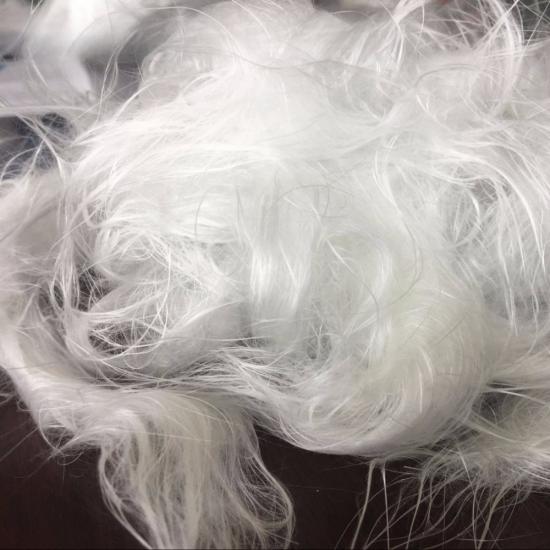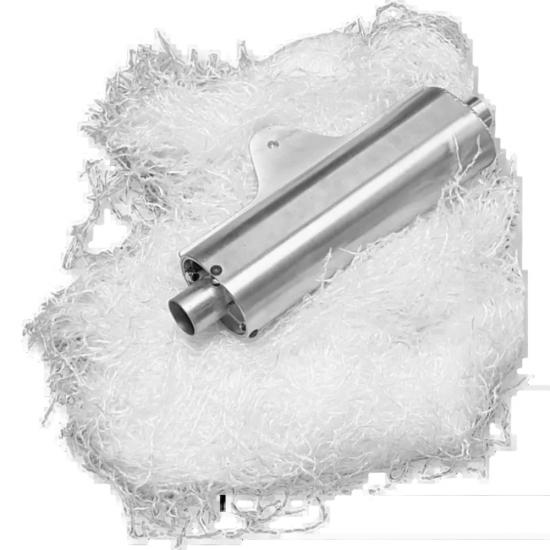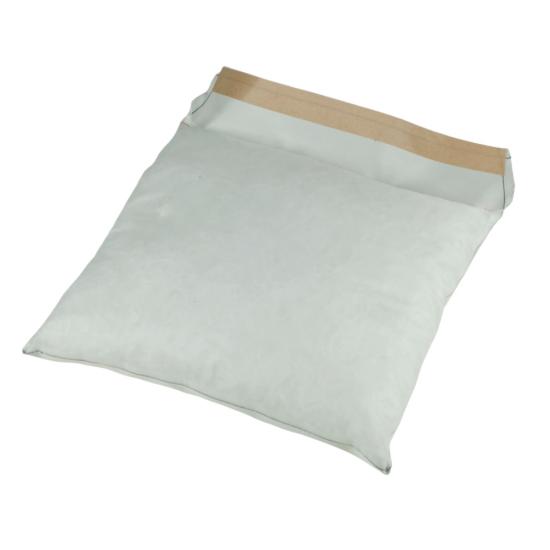

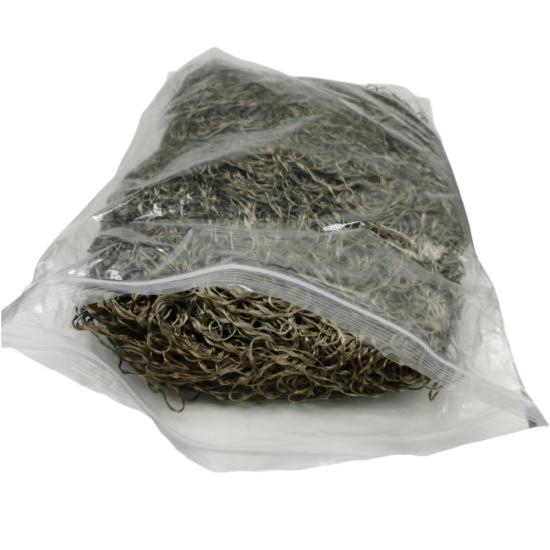
Basalt fiber loose fill muffler packing is a free-flowing fibrous acoustic filling material for absorptive exhaust silencers and mufflers. Unlike a mat, pillow or tubular packing sock, the loose fiber is weighed and distributed into the packing cavity during assembly, allowing it to fill cylindrical, oval, stepped and other approved silencer geometries.
BSTFLEX supplies basalt loose fill for motorcycle, automotive, powersports, generator and industrial exhaust silencer applications where basalt fiber is specified by the customer or selected through an approved development program. Packaging, dry filling weight, bag size, labeling and private-label requirements can be customized for prototype and recurring production orders.
For additional material and component options, visit the BSTFLEX Muffler Packing range.
Quick Summary
- Material: Basalt fiber
- Product form: Loose fibrous fill
- Primary use: Internal acoustic packing for approved absorptive mufflers and exhaust silencers
- Supply options: Pre-weighed bags, bulk packages and customer-specific packing units
- Current packaging directions: 250 g, 500 g, 1000 g and custom quantities
- Customization: Filling weight, package size, labels, barcodes, private-label packaging and carton quantities
- Suitable buyers: Exhaust manufacturers, muffler factories, repacking-kit brands, distributors and industrial silencer producers
- Selection basis: Silencer geometry, dry fiber charge, operating conditions, gas velocity, vibration and retention method
What Is Basalt Fiber Loose Fill Muffler Packing?
Basalt fiber muffler packing is made from basalt-based inorganic fiber prepared in a loose, wool-like state for internal silencer filling. The material occupies the designated cavity around a perforated core or behind a perforated facing, where it provides a porous acoustic medium within the approved muffler design.
The terms basalt wool muffler packing, basalt exhaust packing and basalt fiber silencer packing may be used for this general product direction. The purchase specification should still identify the exact fiber grade, supplied condition, dry filling quantity and package configuration.
Loose fill describes the delivery form. It does not, by itself, define fiber length, installed density, operating temperature or compatibility with a particular filling machine. Those requirements should be confirmed for the actual project.
Why Choose a Loose Fiber Supply Form?
Loose fiber is useful when an exhaust factory wants to control the filling process on its own production line or needs a flexible material for a cavity that is difficult to cover with a standard rectangular mat.
Potential production advantages include:
- flexible filling of irregular or multi-zone cavities;
- easy adjustment of the approved dry charge for different silencer sizes;
- supply in bulk or pre-weighed packages;
- no fixed sheet width or mat cut pattern;
- compatibility with manual or validated metered filling processes;
- simplified inventory where one approved material serves several silencer part numbers with different filling weights.
These advantages depend on process control. Loose fiber should not be installed by visual estimate alone where repeat production requires a defined packing quantity.
Basalt Loose Fill, Basalt Mat and Basalt Packing Kit
BSTFLEX offers several basalt muffler packing directions. They should remain separate products because they transfer different preparation tasks to the customer.
| Supply Form | Construction | Work Remaining at the Customer |
|---|---|---|
| Basalt loose fill | Free fibrous basalt packing supplied by weight. | Weigh or open the approved charge, distribute it into the specified packing zones and complete retention and closure. |
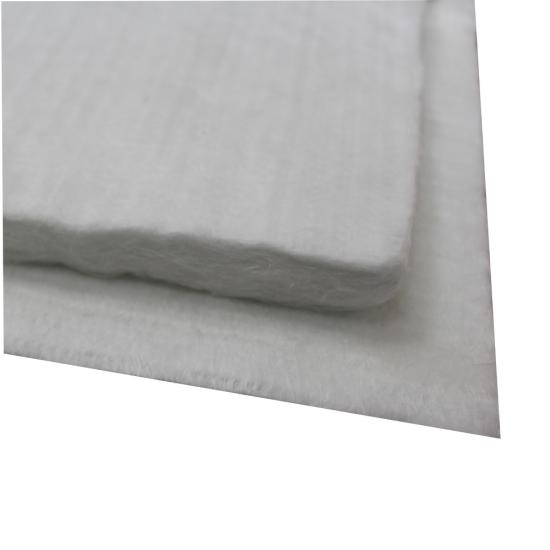
| Basalt packing mat | Sheet or mat construction supplied by thickness, area and weight. | Cut or position the approved piece, control seams and overlap, and insert the assembly. |
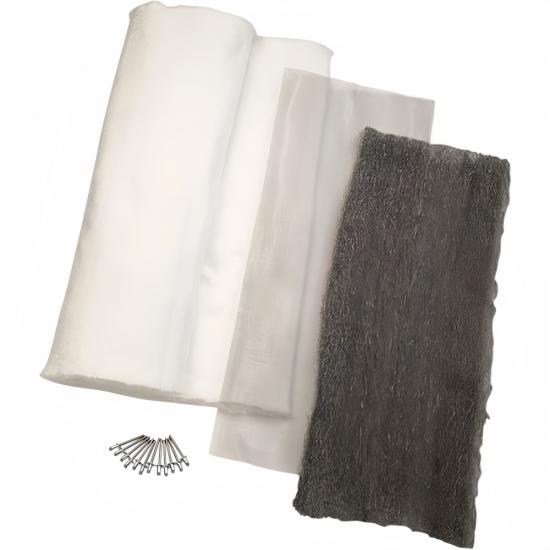
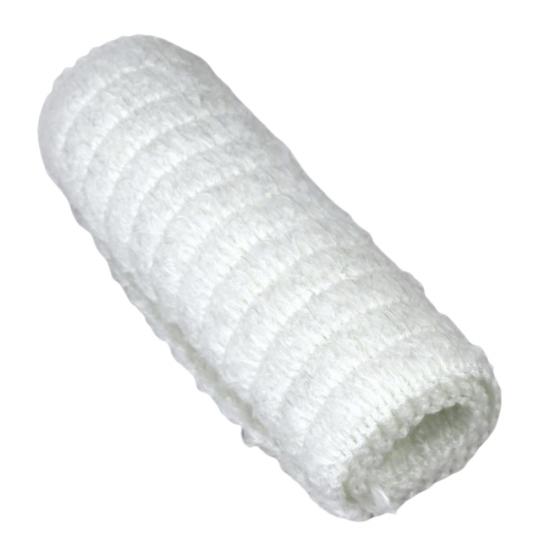
| Compressed basalt packing kit or pillow | Prepared component supplied in a more defined shape. | Position the component, complete any specified forming and assemble the silencer. |
For sheet-form basalt packing, review the BSTFLEX Basalt Muffler Packing Mat. For a compressed component, review the BSTFLEX Basalt Muffler Packing Kit.
Technical Data and Ordering Information
| Material | Basalt fiber |
|---|---|
| Product form | Loose fibrous fill / loose wool form |
| Primary function | Internal acoustic filling for approved absorptive mufflers and exhaust silencers |
| Standard packaging directions | 250 g, 500 g and 1000 g bags |
| Custom packaging | Project-specific pre-weighed charges, bulk bags, customer labels and private-label packaging |
| Filling quantity | According to approved silencer specification, dry fiber charge or validated installed density |
| Temperature rating | Grade- and application-dependent; confirm continuous and peak conditions with BSTFLEX before approval |
| Retention options | According to silencer design; may include stainless steel wool, retaining screen, fabric or another approved layer |
| Development inputs | Drawing, cavity dimensions, original sample, dry filling weight, operating conditions and annual demand |
| Supply type | Prototype, OEM, bulk, distributor and private-label orders |
Technical values not listed above should be confirmed against the actual basalt fiber grade and production specification. A temperature value from a different basalt mat, pillow or competitor product should not be transferred automatically to this loose-fill material.
How Loose Basalt Fiber Works Inside a Silencer
In an absorptive muffler, exhaust gas travels through a perforated core or past a perforated facing. Acoustic pressure fluctuations pass through the perforations and interact with the surrounding fibrous packing.
The installed performance depends on the complete assembly, including:
- perforated-core geometry;
- packing-cavity depth;
- basalt fiber grade and structure;
- dry filling weight;
- installed distribution;
- core-side protection;
- retaining layers;
- exhaust gas temperature and velocity;
- vibration and duty cycle.
The packing material alone does not establish a guaranteed sound reduction, backpressure result or service interval. Those outcomes belong to the validated muffler design.
Determine the Required Packing Quantity
Use an existing approved dry fiber charge whenever one is available for the same silencer and material.
For a simple cylindrical packing cavity with a centered core, the theoretical volume can be estimated from:
V = π × (D2 - d2) × L / 4,000,000
when dimensions are entered in millimeters, where:
- V = theoretical packing volume in liters;
- D = inside diameter of the packing chamber;
- d = outside diameter of the excluded inner envelope;
- L = effective packed length.
The excluded inner envelope may include the perforated core plus an approved stainless steel wool layer or another core-side component.
When an installed density has already been validated:
Dry basalt fiber charge = net packing volume × approved installed density.
This equation converts an approved density into a production quantity. It does not determine the correct density for a new silencer.
One Bag Is Not Automatically One Muffler Charge
A 250 g, 500 g or 1000 g package is a supply unit. It is not automatically the correct amount for one exhaust silencer.
For production purchasing, distinguish:
- package net weight;
- approved dry fiber charge per silencer;
- number of silencers per package;
- process allowance for setup or sampling;
- remaining inventory after a partial package is used.
Do not force the remainder of a bag into a muffler simply to empty the package. Additional purchased material should remain a production-planning allowance, not extra filling for every part.
Pre-Weighed Basalt Packing for Repeat Production
Where the same silencer is produced repeatedly, BSTFLEX can review customer-specific pre-weighed packages.
A single-charge bag may identify:
- basalt fiber product reference;
- dry filling weight;
- customer part number;
- silencer drawing revision;
- lot or batch number;
- barcode or QR code;
- quantity per carton;
- customer brand where required.
Pre-weighed supply can reduce line-side weighing, but the customer should compare it against the actual efficiency and control of its existing filling process.
Filling Irregular and Multi-Zone Silencers
Loose basalt fiber can be useful where a silencer contains oval, stepped or separated packing regions.
For multi-zone designs, state the charge for each region:
- main annular cavity;
- inlet-side end fill;
- outlet-side end fill;
- larger pocket around an offset core;
- packing behind a perforated panel;
- separate acoustic chamber.
A correct total weight does not guarantee correct distribution. The operator instruction should show where each part of the charge belongs.
Core-Side Protection and Fiber Retention
High gas velocity and pressure pulsation near the perforated core can contribute to fiber erosion or migration in some silencer designs.
Where the approved construction requires a metallic inner layer, BSTFLEX supplies:
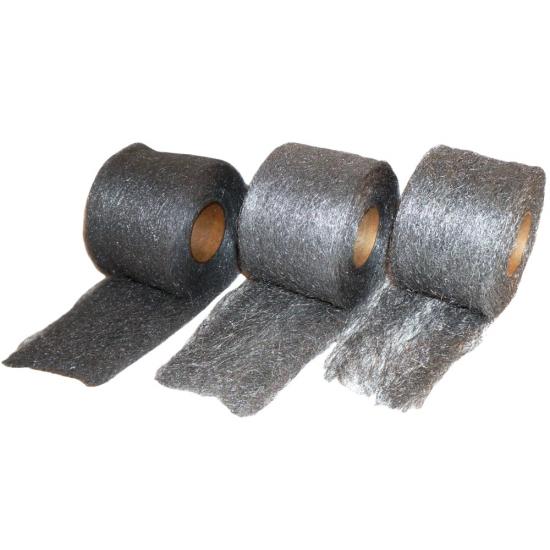
- Stainless Steel Wool Exhaust Muffler Packing;
- Stainless Steel Wool Rolls;
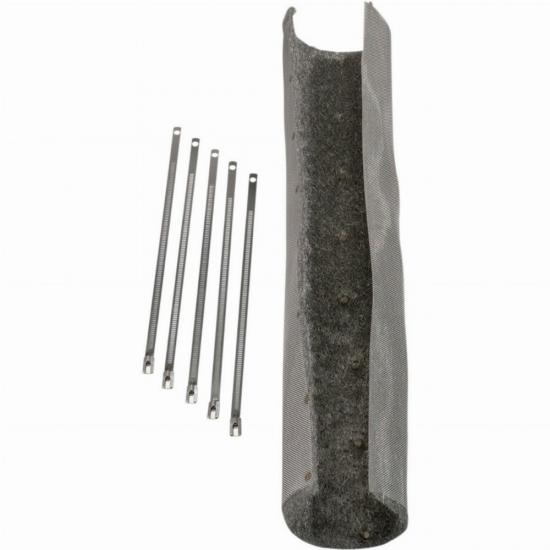
- Steel Wool Muffler Core Sleeves.
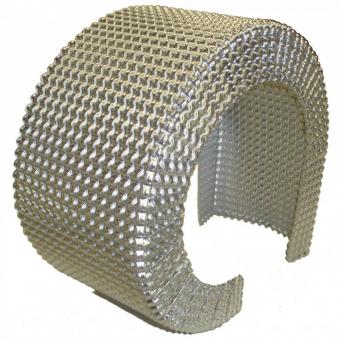
A separate Stainless Steel Exhaust Screen can be used where the design requires mechanical containment.
Stainless steel wool, retaining mesh and basalt acoustic fiber should remain separate lines in the bill of materials. Their weights and functions should not be combined into one undefined packing value.
Applications
Basalt loose fill may be evaluated for approved absorptive silencers used in:
- motorcycle exhaust systems;
- ATV and UTV silencers;
- performance and racing mufflers;
- automotive exhaust silencers;
- heavy-duty diesel mufflers;
- generator exhaust silencers;
- industrial engine silencers;
- construction and agricultural equipment exhaust systems;
- dry marine exhaust silencers;
- custom OEM muffler assemblies.
Application names alone do not establish compatibility. Material approval should use the actual silencer geometry, service temperature, exhaust duty and retention arrangement.
Basalt Fiber vs Fiberglass Muffler Packing
Basalt and fiberglass are separate material families. They should not be compared only by a single advertised temperature value.
| Selection Point | Basalt Loose Fill | Fiberglass Packing |
|---|---|---|
| Material family | Basalt-based inorganic fiber | Glass fiber, including grades such as E-glass where specified |
| Available supply forms | Loose fiber, mat and prepared basalt components depending on product | Loose fiber, yarn, mat, sheet, sock and other components depending on product |
| Selection basis | Actual basalt grade, operating conditions, filling process and validation | Actual glass grade, operating conditions, filling process and validation |
| Direct substitution | Matching weight or package size alone does not establish equivalence; validate the proposed material in the complete silencer. | |
For projects comparing supply forms, see Basalt Loose Fill vs Basalt Packing Mat for Repeat Silencer Assembly.
Quality and Incoming Inspection
| Inspection Item | What to Verify |
|---|---|
| Material identity | Approved basalt fiber reference and required technical documents |
| Net package weight | 250 g, 500 g, 1000 g or customer-specific quantity according to the order |
| Single-charge weight | Target dry fiber charge and agreed tolerance where pre-weighed bags are supplied |
| Material condition | No unacceptable moisture, oil, dirt or cross-contamination |
| Packaging | Correct bag, sealing, label, barcode and carton quantity |
| Traceability | Part number, lot or batch identification and required shipment records |
Agree tolerances, weighing method and sampling plan before production orders. Unknown values should be treated as development requirements rather than filled with generic assumptions.
Handling and Installation Notes
- Follow the technical and safety information for the supplied basalt fiber grade.
- Use suitable workplace controls and personal protection for fibrous material handling.
- Keep the exhaust gas passage, drains and non-packing chambers clear.
- Install only the approved dry fiber charge.
- Distribute the material according to the silencer drawing or work instruction.
- Do not mix unidentified offcuts, other fibers or contaminated recovered material into an approved charge.
- Do not assume that a higher visual packing volume means the correct installed quantity.
- Validate sound, retention and complete-silencer performance under the agreed test conditions.
OEM and Private-Label Supply
BSTFLEX supports basalt muffler packing projects for exhaust manufacturers, distributors and aftermarket brands.
Customization can include:
- 250 g, 500 g and 1000 g packages;
- customer-specific single-charge bags;
- bulk packaging;
- part-number labels;
- barcodes and QR codes;
- customer-branded packaging;
- kit quantities;
- carton configuration;
- sample-based development;
- drawing-based filling specifications.
For broader manufacturing and project support, visit Muffler Packing Manufacturer for OEM Exhaust Silencers.
Information Required for a Basalt Muffler Packing RFQ
- exhaust or silencer application;
- silencer drawing or internal dimensions;
- perforated core outside diameter;
- shell inside diameter or profile;
- effective packing length;
- existing material or unused sample;
- approved dry fiber charge or density, if known;
- continuous and peak temperature with measurement location;
- required retention or core-side layers;
- prototype quantity;
- production or annual demand;
- preferred package weight;
- label and private-packaging requirements.
If the filling weight is unknown, provide the internal geometry and operating conditions and identify the quantity as a development item.
Frequently Asked Questions
What is basalt fiber muffler packing?
Basalt fiber muffler packing is a basalt-based fibrous material used as internal acoustic filling in approved absorptive exhaust silencers. It can be supplied as loose fiber, mat or a prepared component depending on the product.
Is basalt loose fill the same as a basalt packing mat?
No. Loose fill is weighed and distributed during assembly. A mat is supplied as a sheet with defined dimensions, thickness and material weight. The two forms require different production controls.
How much basalt muffler packing should be installed?
Use the approved dry filling weight or validated installed density for the actual silencer. A 250 g, 500 g or 1000 g bag is a packaging unit and is not automatically the correct charge for one muffler.
Can basalt fiber replace fiberglass muffler packing?
Do not approve the replacement from material names or equal weight alone. Compare the fiber grades, operating conditions, installed distribution and retention system, then validate the complete silencer.
Does basalt loose fill need stainless steel wool around the core?
Only where the approved silencer design requires a metallic core-side layer. Stainless steel wool and basalt acoustic packing perform different functions and should be specified separately.
Can BSTFLEX supply pre-weighed basalt muffler packing bags?
Yes. BSTFLEX can review customer-specific filling weights, bag sizes, labels, barcodes, carton quantities and private-label requirements for suitable OEM and distributor projects.
What applications can use basalt exhaust packing?
Basalt loose fill may be evaluated for motorcycle, automotive, heavy-duty diesel, generator, industrial and dry marine absorptive silencers where the material has been approved for the actual geometry and operating conditions.
Request Basalt Fiber Muffler Packing Samples
Send BSTFLEX the silencer drawing, packing-zone dimensions, required basalt fiber specification, dry filling weight and order quantity. State whether you need standard 250 g, 500 g or 1000 g bags, customer-specific pre-weighed charges or bulk packaging.
Request Basalt Fiber Loose Fill Muffler Packing Samples and an OEM Quote