What are you looking for?

A muffler packing screen is a mechanical retaining layer used to contain acoustic packing inside an exhaust silencer. It does not replace fiberglass, basalt or another approved packing material. Its job is to help keep that material in the intended position while allowing the silencer construction to function as designed.
For OEM purchasing, the screen should be specified by more than sheet size. Wire diameter, interlaced construction, layer count, edge treatment, cut dimensions, overlap and installation position all affect how the component fits and handles during assembly.
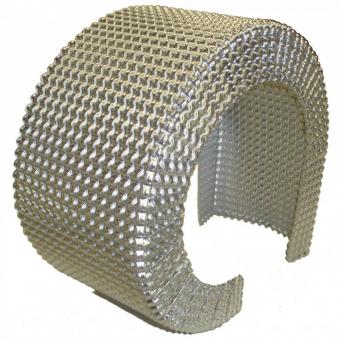
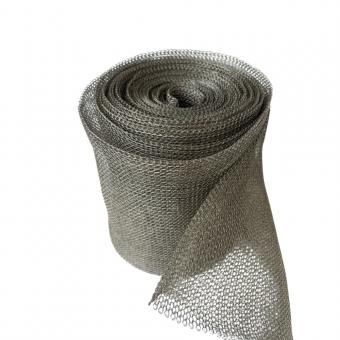
The BSTFLEX Stainless Steel Exhaust Screen for Muffler Packing Retention uses 0.011-inch stainless steel wire strands in a two-layer interlaced sheet. The current standard sheet is 12 × 18 inches with two crimped sides. Custom cutting and packaging can be discussed for OEM and repacking-kit supply.
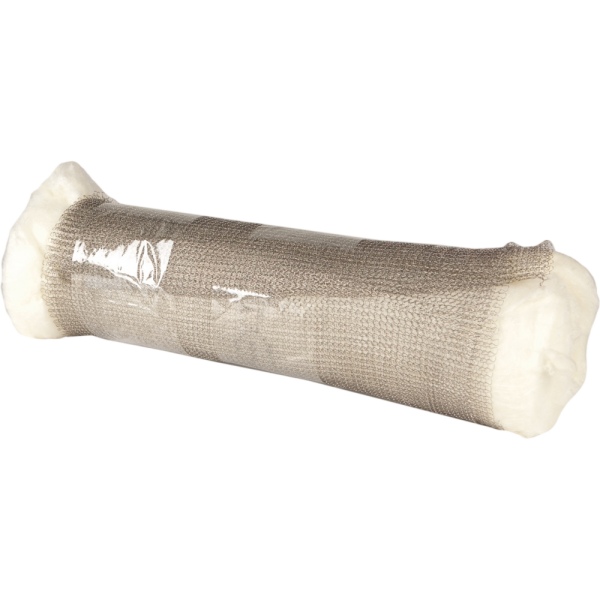
A muffler packing retainer forms a metallic enclosure or supporting layer around the acoustic packing. Depending on the silencer design, it may help:
The screen itself is not the main acoustic filling. A silencer using fiberglass packing still needs the specified fiberglass charge. A basalt or ceramic packing design still needs its approved fiber quantity.
Do not reduce the acoustic filling simply because a retaining mesh is added.
The market uses several overlapping descriptions:
These terms may describe the same general function, but they do not guarantee the same construction.
A regular woven wire mesh, knitted mesh, expanded-metal sheet and interlaced multi-layer wire screen can have very different opening geometry, flexibility and edge behavior. The purchasing specification should identify the approved construction rather than relying only on the word mesh.
| Specification | Current Product Reference | OEM Purchasing Note |
|---|---|---|
| Material family | Stainless steel wire | Specify required alloy separately where the project requires a defined grade. |
| Wire diameter | 0.011 in | Approximately 0.279 mm; use the agreed drawing value and tolerance for production orders. |
| Construction | Two-layer interlaced wire sheet | Do not substitute single-layer mesh solely because the outside dimensions match. |
| Standard sheet size | 12 × 18 in | Approximately 304.8 × 457.2 mm; custom cutting can be reviewed for production projects. |
| Edge treatment | Two crimped sides | Define which edges are crimped on custom components and how they are oriented during assembly. |
| Application | Muffler and silencer packing retention | Final size and position should match the actual internal silencer construction. |
The metric values above are direct dimensional conversions. They do not create new metric stock sizes or additional manufacturing tolerances.
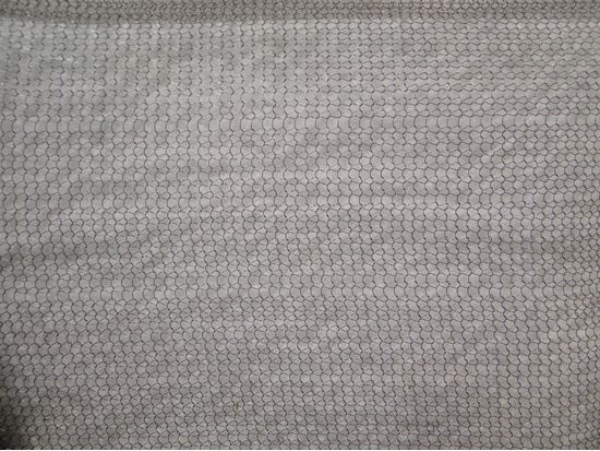
A common RFQ mistake is to specify only the wire diameter.
Wire diameter describes the thickness of the individual wire strand.
Opening geometry describes the spaces created by the wire construction.
Layer count describes whether the screen uses one layer, two layers or another defined structure.
These parameters should not be treated as interchangeable.
Two screens made with the same wire diameter can provide very different containment if their interlacing, opening size or layer arrangement differs.
Where an OEM project requires controlled openings, include the opening measurement method and acceptable range on the drawing. Do not infer an opening size only from the wire diameter.
A thicker wire does not automatically make a better stainless steel muffler mesh. Increasing wire size can change:
The approved wire diameter should therefore be considered together with the screen construction and the silencer geometry.
For replacement supply, begin with the existing approved screen or an unused sample. For new development, trial the proposed screen in the complete packing assembly rather than selecting wire diameter independently.
The current BSTFLEX product uses a two-layer interlaced wire sheet.
This should be written explicitly on an OEM drawing. A purchase order that states only “stainless steel mesh” leaves open several possible constructions.
The specification can identify:
If a supplier proposes a different layer arrangement, treat it as a construction change and review the fit and retention performance before repeat production.
Raw cut wire edges can behave differently from formed or crimped edges during insertion.
The BSTFLEX screen currently uses two crimped sides to improve handling and help the sheet maintain a cleaner edge during assembly.
For custom-cut muffler packing mesh, define:
Do not specify only the raw blank dimensions if crimping changes the usable finished width.
A standard 12 × 18-inch sheet can be trimmed for suitable applications, but an OEM cut component should be developed from the actual silencer.
Provide:
A rectangular sheet may be suitable for a simple cylindrical packing assembly. Oval, stepped or irregular silencers may need a different cut pattern.
For an approximately circular packing assembly, the geometric circumference can be estimated from:
Screen wrap length before overlap = π × finished packing outside diameter.
If the finished packed assembly has an outside diameter of 100 mm:
π × 100 mm = approximately 314 mm.
This value is the basic circumference only. The final cut length may also need:
This calculation example does not establish a recommended overlap or finished screen size.
Too little overlap can leave an unintended opening in the retaining layer. Excessive overlap can create a locally thicker or stiffer region.
The assembly specification should identify:
Do not tell operators only to “wrap tightly.” Tightness is subjective and can change both the packing shape and the screen geometry.
A retaining screen and stainless steel wool should remain separate component types.
Steel wool may be used as a metallic fiber layer close to the perforated core. A screen provides a wire-based retaining structure around or within the packing assembly.
Some silencer designs may use both.
For a detailed construction comparison, see Stainless Steel Wool Core Wrap vs Retaining Screen.
Do not remove an existing steel wool layer because a stainless screen is being added, and do not assume that steel wool automatically provides the same containment as the approved screen.
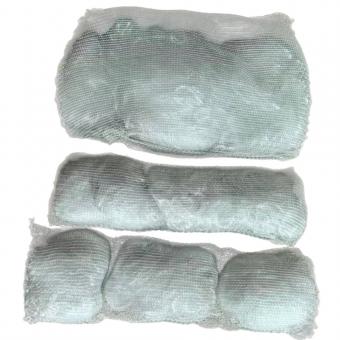
The BSTFLEX Fiberglass Muffler Packing Sock uses a woven fiberglass mesh bag to contain fiberglass yarn filling.
That construction is different from p259.
| Comparison | Stainless Steel Packing Screen | Fiberglass Mesh Packing Sock |
|---|---|---|
| Main material | Stainless steel wire | Woven fiberglass mesh plus fiberglass filling |
| Primary supply form | Metallic retaining sheet | Contained packing component |
| Does it include the main acoustic filling? | No | Yes |
| Main RFQ dimensions | Sheet or cut size, wire construction and overlap | Diameter, length, filling weight and mesh construction |
| Typical purchasing role | Separate retention component | Ready-to-install or semi-finished packing component |
Do not use the two product descriptions interchangeably simply because both contain the word mesh.
The screen must work with the actual packing construction.
BSTFLEX supplies several muffler packing materials, including fiberglass, stainless steel wool, ceramic fiber, basalt fiber and preformed packing components.
For each screen project, identify:
Do not select a screen first and then change the packing quantity solely to make the screen fit.
Any additional metallic layer occupies space.
When a screen wraps around the outside of the acoustic packing, confirm that the finished assembly still fits inside the shell without forcing the packing into an unintended compression state.
For a cylindrical assembly:
Finished screen envelope ≈ packed component outside diameter + screen contribution.
The actual contribution depends on the wire construction, layer count, overlap and local edge treatment. Do not assume that wire diameter alone equals the increase in finished diameter.
Trial the actual assembly where clearance is limited.
A muffler repack screen can help contain packing, but it does not establish the correct amount of packing.
Keep these specifications separate:
If the existing packing is too loose or too dense, adding a screen does not automatically correct the underlying filling specification.
For repeated assembly, pre-cut screens can reduce line-side measuring and trimming.
A custom cut specification may include:
Where several silencer models use the same screen material but different cut sizes, assign a separate finished part number to each approved cut.
| Purchasing Option | Work at Customer | Main Cost Factors |
|---|---|---|
| Standard sheet | Measure, trim, identify and prepare for installation. | Sheet price, cutting labor, offcuts and inspection. |
| Pre-cut rectangle | Position, overlap and install. | Piece price, dimensional tolerance and packaging. |
| Custom-shaped screen | Orientation and final assembly. | Cutting method, complexity, yield and order quantity. |
| Kit component | Install with the other approved repacking parts. | BOM control, packaging, labels and component matching. |
Compare cost per accepted silencer rather than only price per sheet.
Offcuts from stainless steel mesh are production scrap unless the drawing explicitly approves their use elsewhere.
Do not add small leftover pieces around a packing assembly simply to reduce waste. Extra overlaps and irregular metal pieces can change local stiffness, thickness and assembly fit.
For repeat orders, optimize the cutting layout around the required finished part dimensions.
The supplier can review:
| Inspection Item | What to Check |
|---|---|
| Material identity | Approved stainless material reference where specified. |
| Wire diameter | Approved diameter and measurement method. |
| Construction | Correct two-layer or other approved interlaced structure. |
| Finished dimensions | Width, length and custom profile according to drawing. |
| Edges | Correct crimped, folded or cut-edge configuration. |
| Piece condition | No unintended distortion, severe snagging or foreign material. |
| Identification | Part number, drawing revision and lot reference where required. |
| Packaging | Correct piece count, label and protection during shipment. |
Agree tolerances and sampling methods before production orders. The existing nominal product values should not be interpreted as manufacturing tolerances unless those tolerances have been separately confirmed.
A screen sample should be evaluated with the actual acoustic packing, core and shell.
Record:
If sound or backpressure is part of the project validation, test those properties using the complete muffler under the agreed procedure. A screen specification alone does not establish the result.
No. The screen is a retaining component. The acoustic packing remains a separate material with its own weight, density and installation specification.
No. Screen mesh is made from interlaced wire. Stainless steel wool is a metallic-fiber material. Some mufflers use both in different positions.
The current BSTFLEX product is designed to allow trimming for suitable applications. For repeat OEM assembly, specify the finished cut size so operators do not have to measure every screen individually.
The current product specification lists 0.011-inch stainless steel wire strands, approximately 0.279 mm. Confirm the current drawing and purchasing specification when ordering production quantities.
Crimped edges provide a more controlled finished edge for handling and insertion. For custom components, identify which edges require crimping and the finished size after edge forming.
BSTFLEX can review custom cut sizes, packaging and OEM screen requirements based on drawings, silencer dimensions or samples. Material and construction requirements should be confirmed during quotation and sample approval.
Start with the BSTFLEX Stainless Steel Exhaust Screen for Muffler Packing Retention. Send the required wire specification, screen construction, finished dimensions, edge treatment and order quantity.
Also provide the perforated core dimensions, packing material, packed outside dimensions and intended overlap where available. For projects combining screens with custom fiberglass, basalt or stainless steel wool packing, review the BSTFLEX OEM Muffler Packing Manufacturing Service.
Request Muffler Packing Screen Samples and an OEM Quote

No.10, Chuangxin North Road, Nanshan Park, Ningguo Economic and Technological Development Zone, Ningguo City, Anhui Province, China
Tel/Whatsapp : 0086-15856303740
Email : sales@bstbraidedsleeve.com
Skype : vanesa-cheng