What are you looking for?
An exhaust manifold heat shield rattle can come from a loose attachment, a damaged mounting feature or contact with a neighboring component. The sound alone does not identify which condition is responsible. Replacing the metal shell without checking its supports can leave the original problem in place.
For an equipment manufacturer or replacement-parts buyer, the useful question is not simply whether a new shield looks stronger. It is whether the proposed part restores the required coverage and remains correctly located through the operating conditions of the engine.
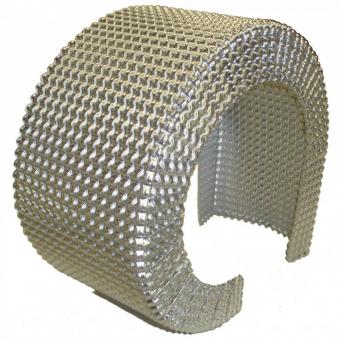
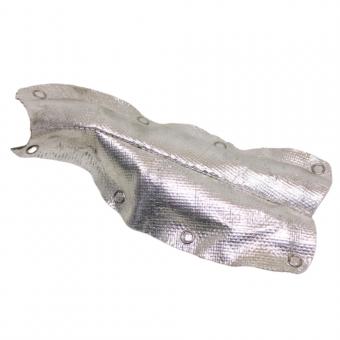
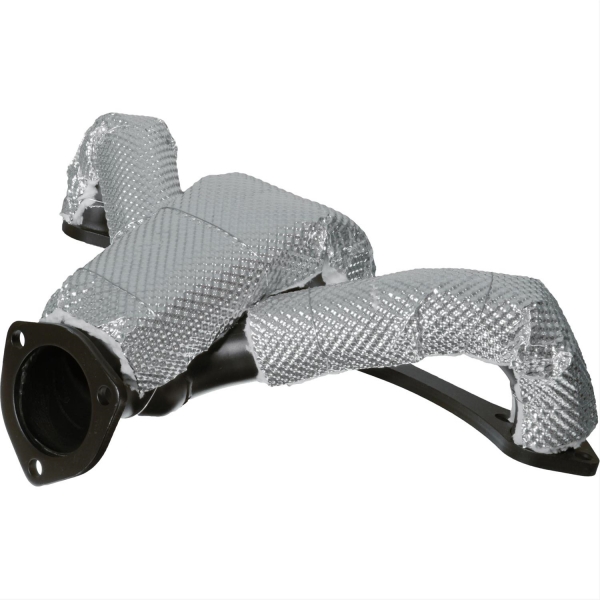
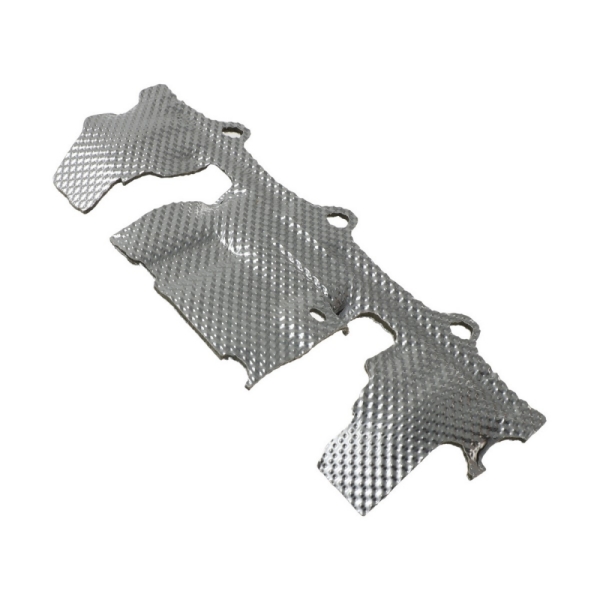
BSTFLEX supplies a stamped exhaust manifold heat shield in aluminum or stainless steel constructions, with insulation options subject to the project specification. This article concerns rigid metal manifold shielding rather than flexible manifold blankets.
Before dismantling the assembly, record the reported condition: cold start, warm idle, a particular engine-speed range, load changes or operation after recent exhaust work. Include the part revision and any change to the manifold, brackets or surrounding pipework.
A noise confined to a narrow speed range makes vibration response worth investigating. A noise that appears after warm-up makes temperature-dependent clearance worth investigating. Neither observation is a diagnosis. Exhaust leaks, loose neighboring parts and other engine noises must also be excluded by a qualified technician.
Carry out hands-on inspection only after safe shutdown, sufficient cooling and the isolation required by the equipment procedure. Do not reach around a running engine or press on a hot shield to silence it. Controlled operating observations belong with personnel and equipment suited to the task.
A visible bolt does not prove that the shield is securely retained. Inspect the complete attachment arrangement against the approved assembly: fastener, specified washer or spacer, shield tab, bracket and mounting boss. Identify missing parts, damaged threads, displaced components or a tab that is no longer seated as intended.
Some assemblies use dedicated spacers or isolation features. Others clamp the shield directly. Substituting one arrangement for the other can change both retention and clearance. Do not replace a specified part with an arbitrary washer stack simply because the bolt can still be installed.
The tightening specification belongs to the actual joint. There is no universal torque for exhaust manifold heat shield bolts. Fastener size, material, thread engagement, lubrication and the mounting construction all need to match the applicable instructions. Additional tightening is not a substitute for replacing a torn tab or correcting a damaged support.
If the panel must be forced sideways to engage the last attachment, record the mismatch. Have the dimensions and assembly alignment checked rather than using the fasteners to pull an unexplained distortion out of the shell.
Photograph the shield in position before removing it, then photograph both faces of the affected area. Preserve the orientation of the part and identify the attachment involved. A close-up without a wider assembly view can hide the nearby bracket or pipe responsible for contact.
| Observed condition | What to examine | What the observation does not prove |
|---|---|---|
| Enlarged hole or wear around a fastener | Retention, mating hardware, contact marks and the original hole geometry | That every elongated opening is wear; some slots are intentional |
| Crack near a tab root or formed corner | Crack origin, local shape, assembly strain and repeated loading | That the metal grade alone caused the failure |
| Polished edge or local rub-through | Matching marks on adjacent parts and clearance during operation | That a larger gap in one direction is acceptable elsewhere |
| Corrosion or loss of section near an attachment | Remaining material, exposure, finish and the condition of the supporting parts | That replacing only the fastener will restore the joint |
Hole wear and a cracked tab are different findings. Wear can be consistent with relative movement at an interface. A crack may require investigation of cyclic loading, local geometry, corrosion, forming damage or installation strain. More than one mechanism can be present, so a photograph should guide the inspection rather than replace it.
Compare suspect openings with the drawing or an undamaged reference before calling them damaged. Where a crack origin needs engineering examination, preserve it instead of grinding, welding or bending the area before review.
The manifold, shield and supports do not necessarily reach the same temperature or expand by the same amount. Their relative positions can therefore change between a cold fit check and operating conditions. An attachment arrangement that restrains this movement may also create local stress.
Review the closest areas around runners, collectors, brackets and adjoining exhaust components. Include engine movement relative to body-mounted parts. A satisfactory gap at the middle of the shield does not establish clearance at an edge or mounting tab.
For an OEM review, identify the critical clearance locations and agree how their behavior will be assessed safely. Use the installation limits set by the responsible engineer; do not apply a generic minimum air gap to every manifold shield.
A slot, flexible attachment or changed support position may be an engineering option in a particular design. It is not an instruction to enlarge holes in an installed part. Such changes affect retention, coverage and movement and require approval before use.
Increasing sheet thickness changes the shield's mass and stiffness. It does not, by itself, correct a misaligned attachment or an edge striking the manifold. Likewise, adding another fixed mounting point can change the vibration response while also introducing an additional restraint.
Base a proposed revision on the damage evidence. The review may examine the tab transition, unsupported panel area, formed profile, attachment arrangement or proximity to another component. Each proposed change should address an identified condition rather than a general request to make the shield heavier.
Material selection remains important, particularly where the actual temperature or environmental exposure is outside the existing specification. Keep that question separate from fit and retention. Our exhaust manifold heat shield material guide discusses the material-selection side of the project.
A revised part should be evaluated for both mechanical behavior and thermal protection. Eliminating a rattle by changing coverage or placing the shield against another component is not sufficient evidence of a successful thermal design.
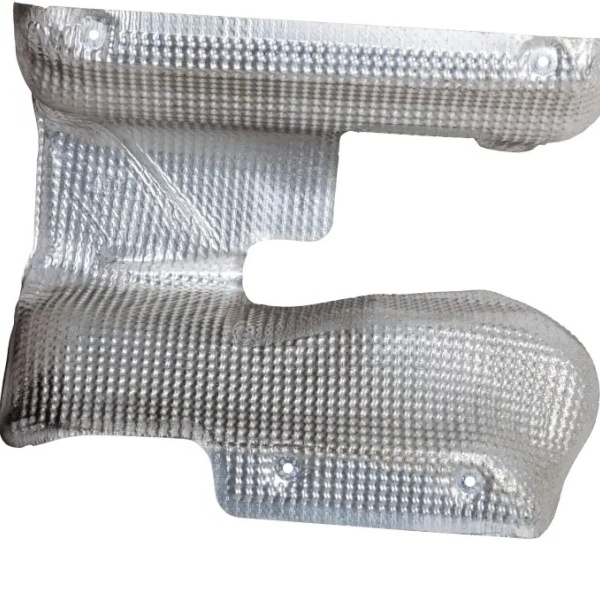
For exhaust manifold heat shield replacement, identify the manifold part number, mounting arrangement and relevant engine configuration. Check the actual installation rather than assuming that an engine family name establishes compatibility.
A replacement needs to match more than the visible outline. Attachment positions, formed depth, edge returns and clearance to sensors or wiring can determine whether the part functions correctly. Where a reference shield is distorted or incomplete, distinguish the original geometry from damage before developing a replacement.
Confirm the condition of the manifold mounting bosses, threads and brackets. A new shield fitted to a damaged support can reproduce the same problem. Where the manifold and supports remain serviceable, replacement of the shield may be a separate operation; the applicable service instructions must determine the scope.
Keep neighboring shields distinct. A manifold shield and a stamped turbocharger heat shield can meet near the turbine inlet without being interchangeable parts. Check their interface and access requirements when either component changes.
Permanent removal is not an appropriate default response to a rattle. The required thermal barrier must be restored using an approved repair or replacement arrangement. A quiet engine bay does not establish that nearby hoses, connectors or panels remain adequately protected.
When several parts show similar damage, send evidence from more than the worst example. Identify the affected quantity, production lot where known, time in service and location of the damage. Include an unaffected reference from the same configuration when one is available.
Record the operating condition associated with the noise and any preceding work on the exhaust system. Mark contact areas on an assembly photograph and label the affected mounting features. Keep the returned hardware with its corresponding location where practical.
Separate confirmed facts from explanations under investigation. “Crack at the rear mounting tab after the recorded service interval” is an observation. “Material too thin” is a proposed explanation that still needs evidence.
For a revised design, define what will demonstrate improvement: secure retention, acceptable clearance, absence of new damage over the agreed evaluation and temperatures within the relevant component limits. Record any inspection or test not yet completed rather than describing the part as fully validated.
The BSTFLEX Exhaust Manifold Heat Shield is the product reference for a rigid metal manifold-shield inquiry. Specify the required material, construction, mounting arrangement and supplied hardware rather than assuming that every configuration shares the same dimensions or performance.
For an existing design, provide the drawing or sample together with installation photographs and the issue to be reviewed. For a new assembly, identify the coverage requirement and available space. Manufacturing details, inspection scope and any application testing should be agreed for the project.
Related formed components are listed in the metal stamping heat shields category. Send BSTFLEX your manifold shield drawing or sample information to discuss a custom quotation. Include the expected quantity and distinguish dimensional reproduction from a redesign request.

No.10, Chuangxin North Road, Nanshan Park, Ningguo Economic and Technological Development Zone, Ningguo City, Anhui Province, China
Tel/Whatsapp : 0086-15856303740
Email : sales@bstbraidedsleeve.com
Skype : vanesa-cheng