What are you looking for?
Automotive wire harnesses increasingly share limited space with exhaust manifolds, turbochargers, catalytic converters, EGR components, transmissions and other high-temperature systems. In these areas, a standard abrasion sleeve or wire loom may protect against mechanical wear but provide little control over thermal exposure.
An automotive wire harness heat protection sleeve adds a thermal barrier around the harness while preserving the flexibility needed for vehicle routing and assembly. The correct solution depends on more than a maximum temperature number. Engineers also need to consider how heat reaches the harness, the distance from the heat source, available clearance, harness diameter, connector geometry, installation sequence and required serviceability.
BSTFLEX manufactures multiple forms of thermal protection for automotive wiring, from aluminized heat protective sleeves for radiant heat shielding to high-temperature textile sleeves and component-specific formed heat shields.
Electrical wiring is often routed through engine compartments, transmissions, exhaust zones and underbody areas where surrounding temperatures can be substantially higher than temperatures in the rest of the vehicle.
Common nearby heat sources include:
Prolonged thermal exposure can accelerate aging of cable jackets, conduit, tapes, clips, connectors and other polymer components. Localized high temperatures can therefore become a wire harness reliability issue even when the harness does not physically contact the heat source.
The purpose of a wire harness heat shield is to reduce the thermal load reaching these components while allowing the harness to follow its intended routing.
Before choosing a sleeve, determine how heat reaches the harness. Different heat-transfer mechanisms can require different protective constructions.
Radiant heat travels from a hot surface toward the harness without direct physical contact. Exhaust manifolds, turbochargers and catalytic converters are common automotive radiant heat sources.
A reflective outer surface is particularly useful in this condition. This is why aluminum foil and aluminized textile constructions are widely used for automotive wiring routed near exhaust components.
A harness may be located inside a generally hot engine compartment even when no single heat source is directly facing it. In this situation, insulation thickness, textile construction and the temperature capability of all layers become increasingly important.
If the sleeve or harness touches a hot component, heat can transfer by conduction. A thin reflective surface alone should not be treated as a substitute for sufficient insulation, air clearance or improved routing.
For this reason, selecting a wire harness thermal protection system should begin with the actual thermal environment rather than choosing a product only from its appearance.
No single sleeve construction is ideal for every automotive location. The following materials address different combinations of radiant heat, ambient temperature, flexibility, abrasion and installation requirements.
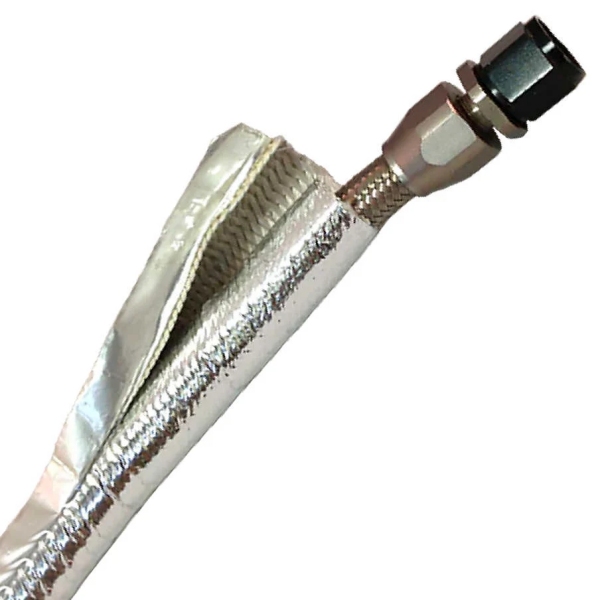
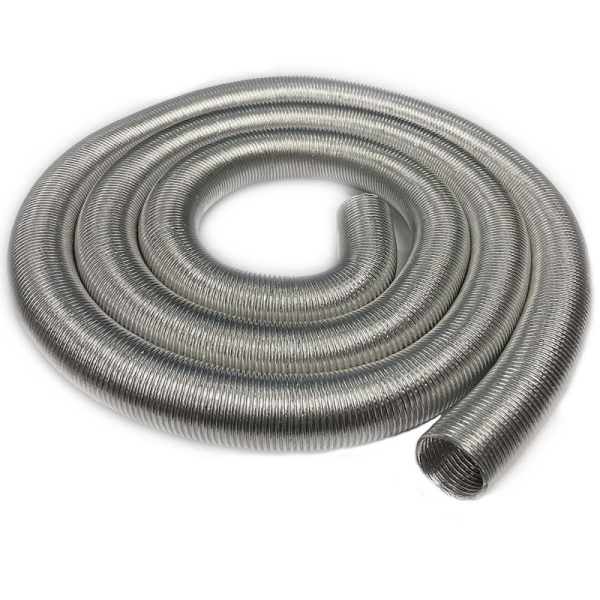
An aluminized fiberglass sleeve combines a reflective aluminum outer surface with a fiberglass-based supporting layer. It is one of the most useful constructions where radiant heat from an exhaust component is the primary problem.
Typical applications include:
Different designs can use aluminum foil, aluminized film or aluminized fabric together with braided, woven or sewn fiberglass structures.
See the BSTFLEX Aluminized Heat Protective Sleeve range for reflective sleeves designed for automotive wire harnesses, cables, hoses and fluid lines.
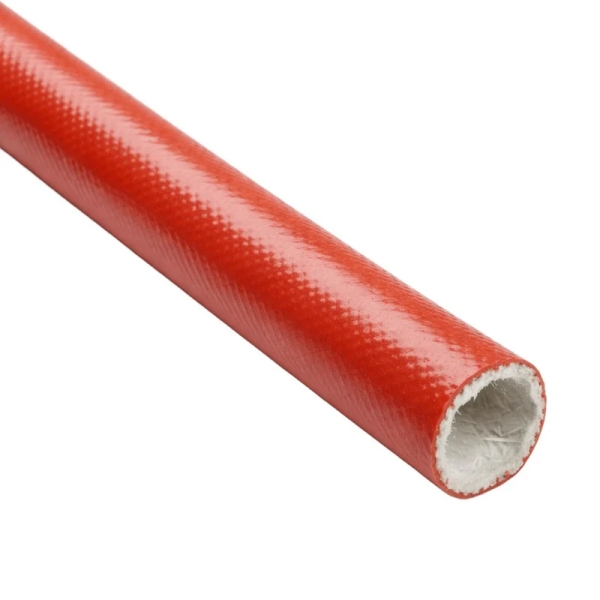
Silicone-coated fiberglass constructions are useful where the protective sleeve must combine high-temperature capability with flexibility and resistance to common industrial or automotive environments.
Compared with a bright aluminum reflective surface, this type of sleeve is generally selected for a different thermal requirement. It may be appropriate when the harness needs a durable textile barrier and the application involves elevated ambient temperature or localized exposure rather than primarily intense radiant heat reflection.
Basalt fiber can be used in flexible high-temperature sleeving where a mineral-fiber textile construction is preferred. It provides an alternative to conventional fiberglass for certain wire and cable protection applications.
Selection should be based on actual operating temperature, mechanical requirements, sleeve construction and environmental exposure rather than fiber type alone.
Silica-based sleeves are considered when the application requires a higher-temperature textile material than conventional fiberglass constructions.
These products can be useful for wiring and cable systems close to very hot equipment or exhaust-related components, although routing, abrasion resistance and installation geometry still need to be evaluated.
When a single reflective or textile layer cannot provide sufficient thermal control, a multi-layer sleeve can combine several functions. A typical design may use a reflective exterior together with an intermediate insulation layer and a textile inner layer.
Layer selection should be driven by the required temperature reduction, available wall thickness and installation space.
The material is only one part of the specification. The physical construction of the sleeve can determine whether it is practical to install on the vehicle assembly line or on an existing harness.
| Sleeve Design | Typical Application | Installation Consideration |
|---|---|---|
| Slide-On Tubular Sleeve | New harness assemblies before connectors are installed | Harness must pass through the sleeve |
| Wrap-Around Sleeve | Existing harnesses and assemblies with installed connectors | Can be fitted around the harness |
| Hook-and-Loop Sleeve | Serviceable or retrofit harness protection | Can normally be opened and reclosed |
| Snap-Closure Sleeve | Repeatable OEM or service installation | Provides defined mechanical closure points |
| Self-Closing Sleeve | Fast installation over wiring bundles | Opens for harness insertion and closes around the bundle |
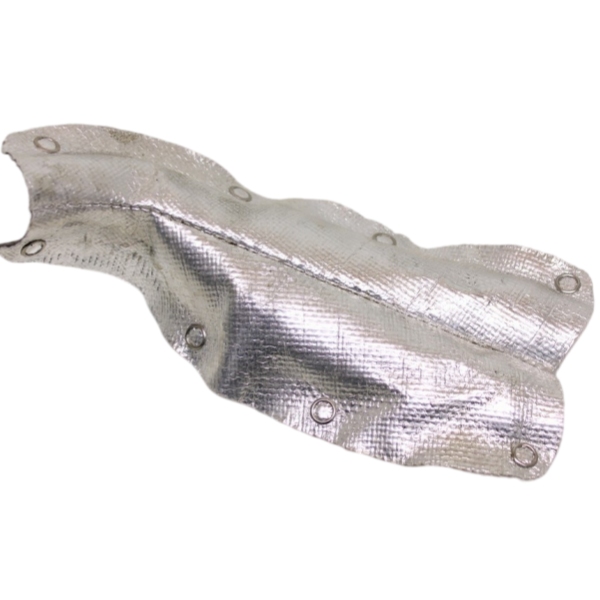
| Custom-Shaped Heat Shield | Branches, connectors and irregular harness geometry | Designed around the component shape |
A slide-on sleeve is often the simplest solution when thermal protection can be incorporated during harness production. It provides continuous circumferential coverage and avoids additional closure hardware.
However, completed automotive harnesses frequently have connectors, terminals, mounting clips or branches that are much larger than the main cable bundle. In these cases, sliding a tubular sleeve over the assembly may be impractical.
A wrap-around construction allows the wire harness heat protection sleeve to be installed after harness assembly. Depending on servicing and OEM requirements, closure can be provided by hook-and-loop fasteners, snaps, overlapping textile structures or other mechanical methods.
Exhaust manifolds create one of the most common radiant heat challenges in an engine compartment. Wiring can pass nearby because of sensor location, packaging constraints or the routing required to reach engine-mounted electrical components.
For this application, engineers should evaluate:
A reflective aluminized construction may substantially reduce radiant heat reaching the harness when the sleeve is correctly oriented toward the heat source and appropriate spacing is maintained.
Turbocharger installations combine high local heat with limited packaging space. Wiring may serve boost-control components, exhaust sensors, actuators or nearby engine systems while passing close to the turbine housing and exhaust piping.
These applications often require a combination of radiant heat reflection, thermal insulation and secure sleeve positioning. A sleeve that shifts away from the protected section during vehicle operation may not provide the intended coverage.
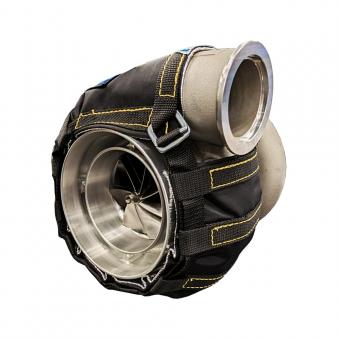
For restricted geometries, the thermal management system may combine a wire harness sleeve with a separate turbo or exhaust heat shield rather than relying on a single protection component.
Transmission harnesses are another important application for automotive thermal protective sleeving. Harnesses may be routed near the transmission housing, exhaust system or other hot components while still requiring controlled positioning and reliable electrical performance.
A transmission wire harness sleeve can be manufactured as a simple tubular part or developed as a component-specific assembly with cutouts, locating features, fasteners or reinforced ends.
For higher-volume OEM projects, dimensional repeatability and assembly method become as important as the raw sleeve material. The protective component must fit the harness consistently and remain in the intended position throughout vehicle operation.
Exhaust gas temperature sensors, oxygen sensors, pressure sensors and other engine or aftertreatment components often require wiring to pass through thermally demanding areas.
A compact automotive wiring heat shield can protect the cable section while still allowing routing around connectors, clips and brackets.
Important specification points include:
A cylindrical sleeve works well when the harness geometry is reasonably uniform. It becomes less effective or difficult to install when the protected component contains large branches, molded connectors, clips or complex three-dimensional transitions.
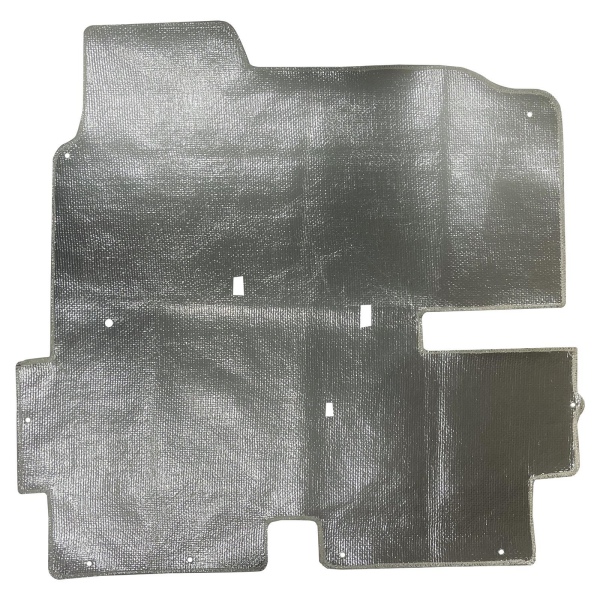
In these applications, a shaped textile heat shield can be cut, sewn and formed around the actual assembly.
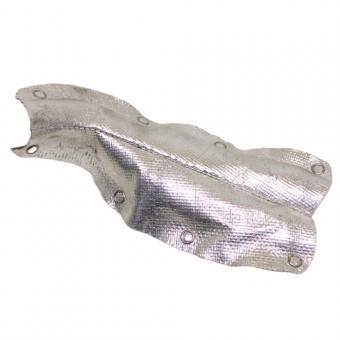
BSTFLEX also manufactures Custom-Shaped Aluminized Fiberglass Automotive Heat Shields for automotive components that cannot be adequately protected by a conventional straight sleeve.
SAE J2302 is a test method used to evaluate the thermal effectiveness of sleeve, tubing and tape insulation against radiant heat. It compares the surface temperature of a standardized test body with and without the protective material under defined heat-source conditions.
This distinction matters because a material's nominal temperature capability and its ability to reduce radiant heat reaching a wire harness are not the same property.
For OEM projects where SAE J2302 or another customer-specific thermal test is required, the relevant sleeve construction should be evaluated under the specified test conditions. A supplier should not assume that a general material temperature rating automatically demonstrates compliance with a vehicle-specific thermal requirement.
A useful RFQ contains more information than the required sleeve diameter. The following engineering data allows the thermal protection system to be evaluated more accurately.
Provide the harness outside diameter or dimensional range, protected length and any larger connectors, terminals, branch points or clips.
Identify whether the harness is near an exhaust manifold, turbocharger, catalytic converter, EGR pipe, transmission or another heat source.
Provide known heat-source temperature, surrounding temperature and required maximum harness temperature where available.
Specify the minimum distance between the heat source and the protected harness. Clearance can be an important factor in radiant heat shielding performance.
State whether the sleeve can be installed before connectors are attached or must be fitted around a finished harness.
The sleeve must accommodate the harness routing and bending radius without creating unnecessary stiffness or assembly problems.
Identify requirements for abrasion resistance, vibration, edge durability, fastener retention or additional physical protection.
Indicate potential contact with engine fluids, road contamination, water or other environmental conditions relevant to the vehicle installation.
Include applicable customer specifications, thermal test methods, material requirements and documentation requirements at the beginning of the project.
Automotive thermal protection components frequently require more customization than standard industrial sleeving. The harness may have a defined mounting position, restricted clearance, multiple branch points or a fixed installation process on the assembly line.
BSTFLEX can manufacture thermal protection components from customer drawings, dimensions or physical samples. Depending on the design, customization can include:
There is no universal sleeve that should be specified for every automotive harness. Start with the dominant thermal problem.
If intense radiant heat is coming from a nearby exhaust component, an aluminized reflective construction is often the first technology to evaluate.
If the harness is exposed to generally high ambient temperature or requires a durable textile barrier, fiberglass, silicone-coated fiberglass, basalt, silica or a multi-layer construction may be more appropriate.
If the harness has already been assembled, a wrap-around, hook-and-loop, snap or self-closing sleeve can avoid disconnecting electrical components.
If the geometry includes large connectors, branches or irregular sections, a custom-shaped heat shield may provide better coverage than a conventional tubular sleeve.
The final construction should always be matched to the actual heat source, required temperature reduction, installation geometry and OEM validation requirements.
BSTFLEX manufactures heat protection products for automotive wiring, hoses, cables, fluid lines and exhaust-adjacent components. Available technologies include aluminized reflective sleeves, fiberglass-based thermal protection, high-temperature textile sleeves, removable wrap-around constructions and custom-shaped automotive heat shields.
For an OEM or custom wire harness thermal protection project, send the harness dimensions, heat-source information, installation photos, drawings and required specifications. This information allows the sleeve construction and installation method to be evaluated before sampling.
A wire harness heat protection sleeve is a flexible thermal barrier installed around automotive wiring to reduce heat exposure from nearby components such as exhaust manifolds, turbochargers, catalytic converters, transmissions and EGR systems.
There is no single best material for every application. Aluminized fiberglass is particularly useful for radiant heat shielding, while other fiberglass, silicone-coated fiberglass, basalt, silica and multi-layer constructions may be selected for different combinations of temperature, flexibility and environmental exposure.
Yes. Wrap-around, hook-and-loop, snap-closure and self-closing designs can be installed around many completed harnesses without passing large connectors through a tubular sleeve.
A reflective aluminum surface can reduce radiant heat reaching the protected harness, particularly when the sleeve faces the heat source and suitable spacing is maintained. Direct contact with a hot surface creates a different heat-transfer condition and may require additional insulation or improved routing.
SAE J2302 is used to evaluate the thermal effectiveness of sleeve, tubing and tape insulation against radiant heat under defined test conditions. It should not be confused with a generic material temperature rating.
Yes. Diameter, length, textile structure, reflective surface, insulation layers, fastening system, cutouts, sewing and overall shape can be customized according to the wire harness and installation.
Useful information includes harness dimensions, protected length, connector and branch geometry, heat-source type and temperature, clearance, required harness temperature, installation method, expected quantity and applicable OEM specifications or validation requirements.
For reflective automotive wire harness protection, view the BSTFLEX Aluminized Heat Protective Sleeve range or send your drawing and thermal requirements for a custom recommendation.

No.10, Chuangxin North Road, Nanshan Park, Ningguo Economic and Technological Development Zone, Ningguo City, Anhui Province, China
Tel/Whatsapp : 0086-15856303740
Email : sales@bstbraidedsleeve.com
Skype : vanesa-cheng