What are you looking for?
An embossed aluminum heat shield is a precision-engineered thermal protection material designed to reflect radiant heat, reduce surface temperatures, and safeguard components operating in high-temperature environments. Its embossed structure increases surface rigidity, enhances thermal dissipation, and improves acoustic dampening characteristics. Due to its lightweight composition and excellent thermal reflectivity, embossed aluminum heat shielding is widely adopted in automotive exhaust systems, engine bays, industrial machinery, HVAC systems, and heavy-duty equipment.
Modern engines and industrial systems generate increasingly higher temperatures as performance demands rise. Without proper thermal barriers, heat can degrade plastic parts, wiring harnesses, body panels, electronics, and adjacent components. Embossed aluminum heat shields offer a reliable and durable method for managing thermal loads, extending component service life, and improving operational safety.
This article explores the science, construction, benefits, applications, technical specifications, installation considerations, and frequently asked questions related to embossed aluminum heat shields.
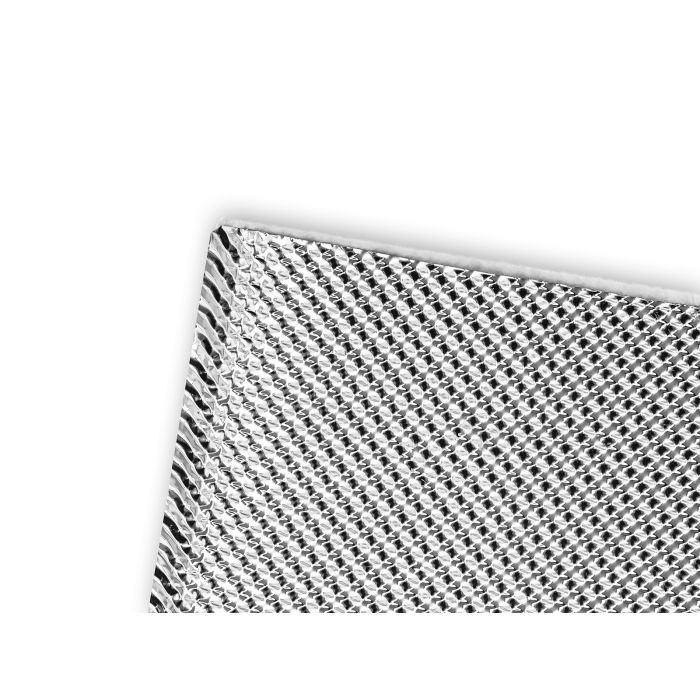
An embossed aluminum heat shield is a multilayer or single-layer aluminum sheet stamped with raised patterns that increase its strength, rigidity, and heat-reflective surface area. These patterns create air pockets that act as thermal barriers, helping reduce heat transfer through conduction and radiation. In many designs, the aluminum layer is laminated with fiberglass, basalt, ceramic felt, or other insulation materials to achieve higher temperature resistance and improved structural stability.
The embossed finish not only reinforces the metal but also reduces noise, making it suitable for both thermal and acoustic applications. Depending on the manufacturing grade, embossed heat shields can withstand temperatures exceeding several hundred degrees Celsius, making them indispensable in automotive performance systems, heavy machinery, and industrial heat management.
Aluminum naturally reflects a significant portion of radiant heat. The embossed texture amplifies this effect by increasing surface area and scattering thermal radiation.
Compared to steel or multi-layer composite panels, embossed aluminum offers strong protection with minimal added weight. This is particularly important in automotive and aerospace applications.
The embossed pattern significantly strengthens the sheet, allowing thinner aluminum to perform like thicker metal while maintaining flexibility for shaping and forming.
The pattern reduces resonance and vibration, helping lower noise levels in engine bays, machinery housings, and exhaust systems.
Aluminum provides outstanding corrosion resistance and longevity even in harsh environments containing water, oil, dust, or chemicals.
Depending on grade and thickness, embossed aluminum heat shields can withstand continuous temperatures around 500 degrees Celsius and higher when reinforced with insulation backing.
The material can be cut, bent, drilled, riveted, or fastened easily, making it adaptable for custom applications.
It is suitable for automotive exhaust systems, turbo heat management, HVAC ducts, generator housings, industrial ovens, and more.
The raised and indented pattern increases structural stiffness and disperses heat. The micro-air pockets create subtle insulation zones that reduce heat conduction.
Depending on performance requirements, the aluminum sheet may be laminated with one of the following:
Fiberglass mat
Ceramic felt
Basalt fiber mat
Aluminized fiberglass cloth
These layers add thermal insulation while the aluminum provides reflective properties.
Heat-resistant adhesives or high-temperature bonding processes ensure stable multi-layer construction for demanding applications.
Embossed aluminum can be pressed into complex shapes without losing structural integrity, making it suitable for custom heat shield designs in automotive exhaust manifolds and turbo systems.
Embossed aluminum heat shields are commonly installed around downpipes, catalytic converters, mufflers, and exhaust manifolds. They reduce heat exposure to body panels, fuel lines, brake lines, and other sensitive components.
Heat emitted by turbo housings and turbine outlets can damage surrounding components. Embossed aluminum shields help direct hot air away and stabilize turbo temperatures.
Lightweight aluminum panels shield wiring harnesses, batteries, intake components, and electronics from excessive radiant heat.
Construction equipment, agricultural machinery, generators, and hydraulic systems demand consistent heat protection, especially in compact engine compartments.
Embossed heat shields are used in air handling units, duct systems, furnace housings, and insulation panels to manage heat flow and improve energy efficiency.
High-temperature processing units employ embossed aluminum panels as thermal barriers and reflective liners.
Boats and marine diesel engines use aluminum shielding to manage cabin heat levels and improve safety in enclosed engine bays.
| Property | Value |
|---|---|
| Material | Embossed aluminum sheet, optional fiberglass or ceramic backing |
| Aluminum Thickness | 0.1 to 1.0 millimeters depending on grade |
| Continuous Temperature Resistance | Approximately 450 to 600 degrees Celsius depending on structure |
| Peak Temperature Tolerance | Up to approximately 700 degrees Celsius with insulation backing |
| Surface Treatment | Embossed reinforcement pattern |
| Thermal Conductivity | Low conductive transfer due to air gap effects |
| Corrosion Resistance | Excellent |
| Tensile Strength | Moderate to high depending on alloy |
| Available Sizes | Sheets, rolls, or custom-cut components |
| Noise Reduction | Moderate vibration and noise damping |
| Applications | Exhaust systems, engine bays, HVAC, industrial insulation |
Specifications may vary depending on alloy, thickness, and laminated structure.
aluminum thermal barrier shield
high temperature embossed heat panel
automotive exhaust heat deflector
reflective aluminum insulation sheet
engine bay heat management plate
industrial high-temperature aluminum shield
heat reflective embossed barrier material
The embossing increases rigidity, allowing thinner sheets to perform as effectively as thicker flat sheets.
Embossed surfaces break up radiant heat patterns, improving heat redirection and reducing surface transfer.
Flat sheets often resonate, while embossed sheets naturally reduce noise due to their textured surface.
Embossed surfaces mask scratches and imperfections, providing a cleaner long-term appearance.
Stainless steel tolerates higher temperatures but is heavier and more difficult to form. Aluminum offers better reflectivity and weight savings.
Fiberglass provides strong insulation but lacks structural rigidity and requires aluminum coating to reflect heat.
Ceramic materials tolerate extreme temperatures but are fragile and unsuitable for exposed automotive environments. Aluminum provides durability and formability.
Basalt fiber heat shields withstand higher temperatures but do not match aluminum's reflectivity or structural properties. Aluminum shields excel in radiant heat reflection.
For exhaust or turbo applications, choose shields with ceramic or fiberglass backing for peak temperature resistance.
Thicker sheets resist deformation but weigh more. Thin embossed sheets provide excellent rigidity with minimal mass.
For automotive engine bays, a lightweight yet rigid material is best. Industrial settings may require higher thickness or additional coatings.
If noise reduction is important, select embossed patterns optimized for vibration dampening.
Choose shield designs that allow easy riveting, bolting, or clipping based on your equipment.
Ensure the installation area is clean and free of oil, debris, or sharp edges.
Embossed aluminum sheets can be shaped using metal shears, cutting wheels, or stamping molds.
Use heat-resistant rivets, bolts, or brackets for secure attachment. Leave a small air gap when possible to enhance insulation performance.
Allow space for slight expansion and contraction during temperature cycles.
After initial heat exposure, check for loosening or vibration-induced movement.
Check for cracks, deformation, or corrosion around mounting points.
Use mild detergents or dry wiping to remove dust, oil, and grime.
Replace shields that have sustained impact damage, fatigue cracks, or significant warping.
It protects components from radiant heat in engines, exhaust systems, industrial machinery, HVAC equipment, and high-temperature environments.
The embossed texture increases rigidity, reduces vibration, and improves heat dissipation efficiency.
Yes. Depending on thickness and backing, embossed aluminum heat shields can tolerate 450 to 700 degrees Celsius.
Yes. Aluminum is one of the lightest structural heat shield materials available.
Yes. The material is highly formable and suitable for custom installations.
Yes. The embossed surface helps decrease resonance and vibration.
Absolutely. It is commonly used to manage heat around turbo downpipes, turbine outlets, and catalytic converters.
The embossed aluminum heat shield is a versatile, high-performance solution for managing heat in both automotive and industrial environments. Its unique embossed structure provides exceptional strength, thermal reflection, acoustic dampening, and corrosion resistance while remaining lightweight and easy to fabricate. Whether used around exhaust components, engine bays, industrial machinery, or HVAC systems, this material offers a reliable and long-lasting thermal barrier.
By selecting the proper thickness, structure, and backing material, and by installing the shield correctly, users can significantly improve heat management, enhance component longevity, and maintain safer, more efficient operation in demanding thermal environments.

No.10, Chuangxin North Road, Nanshan Park, Ningguo Economic and Technological Development Zone, Ningguo City, Anhui Province, China
Tel/Whatsapp : 0086-15856303740
Email : sales@bstbraidedsleeve.com
Skype : vanesa-cheng