What are you looking for?

Muffler packing blowout is a common problem in motorcycle exhausts, racing silencers, ATV and UTV mufflers, and high-flow performance exhaust systems. When the internal packing material moves, burns, breaks down, or escapes through the perforated core, the muffler becomes louder, repacking intervals become shorter, and the exhaust system loses acoustic stability.
The solution is not only to use more muffler packing. Proper retention depends on the right exhaust packing material, correct density, stable installation, suitable protection near the perforated core, and a structure that can resist vibration and exhaust pulse movement. BSTFLEX supplies different muffler packing materials, including fiberglass packing, fiberglass muffler packing sock, stainless steel exhaust screen, stainless steel wool, and custom exhaust silencer packing products.
Muffler packing blowout happens when the packing material inside an exhaust silencer is displaced, damaged, or pushed out of position by exhaust gas flow. In a straight-through muffler, the packing normally sits around the perforated inner core. Exhaust sound waves pass through the core holes and enter the packing layer, where the fiber structure helps absorb noise.
If the packing is not retained properly, the fibers can move away from the core, compress unevenly, burn in hot zones, or escape through the perforations. Once this happens, the muffler often becomes louder and less effective. In severe cases, the packing may need to be replaced much earlier than expected.
Racing exhausts, high-flow motorcycle mufflers, turbocharged systems, and off-road applications can create stronger exhaust pulses. If the packing is placed directly against the perforated core without a suitable retention layer, the gas flow can pull fibers away over time.
Packing that is too loose may shift inside the muffler. Packing that is too tight may lose acoustic efficiency and create uneven stress. Correct density helps the material stay in place while still allowing sound absorption.
Uneven wrapping, gaps around the core, loose ends, or inconsistent fiber distribution can create weak points. These weak points are often where muffler packing begins to move or break down.
Standard loose packing may not be enough for high-temperature or high-vibration exhaust systems. Some mufflers need fiberglass packing, stainless steel wool, stainless steel exhaust screen, or a combined packing structure.
When soft fiber packing is placed directly against a sharp or high-flow perforated core, the fibers can be damaged by mechanical movement and exhaust pulse impact. A metallic screen layer can help protect the packing.
Motorcycles, ATVs, UTVs, and racing exhaust systems experience strong vibration. Repeated heating and cooling can also change packing structure, especially if the material is not selected for the application.
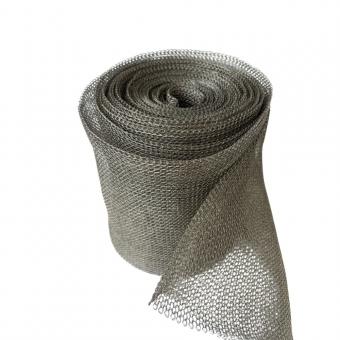
A stainless steel exhaust screen can be installed around the perforated core before the main packing layer. It acts as a retention and protection layer, helping reduce direct fiber contact with the core and limiting packing blowout under high exhaust flow.
For demanding mufflers, see the Stainless Steel Exhaust Screen for Muffler Packing Retention. It is especially useful for racing silencers, motorcycle exhausts, high-flow mufflers, and applications where loose packing tends to move or escape.
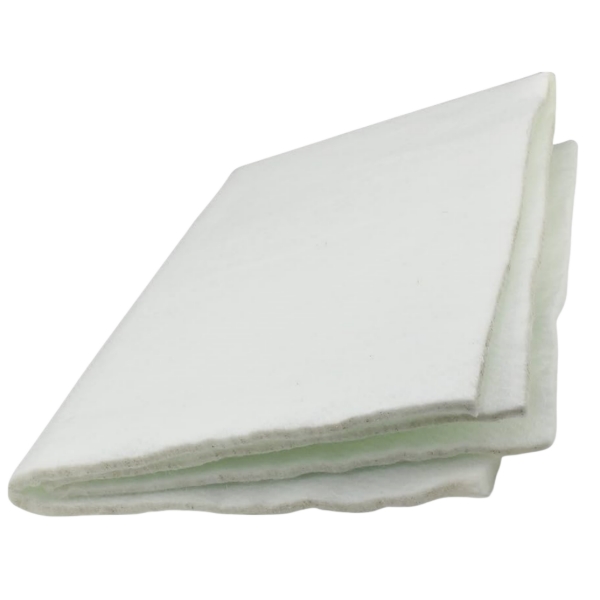
Fiberglass muffler packing is widely used because it offers heat-resistant sound absorption and flexible installation. However, the packing must match the muffler chamber size and exhaust condition. A controlled density helps improve retention and keeps the acoustic layer more stable.
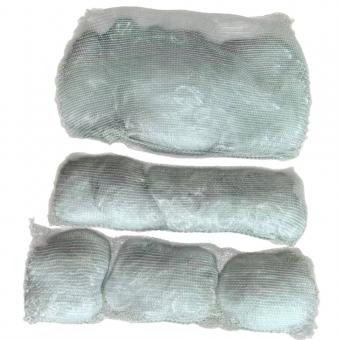
A fiberglass muffler packing sock helps improve installation consistency. The outer woven glass mesh bag contains the inner glass fiber yarn, making the packing easier to position around the perforated core. This is useful for motorcycle muffler repacking, performance exhaust silencers, OEM assembly, and private label repacking kits.
Packing gaps create weak zones where exhaust flow can concentrate. The packing layer should be evenly distributed around the core with no large empty areas. For production lines or kit packaging, pre-cut packing socks and controlled filling weights can reduce installation variation.
A standard road motorcycle, a racing silencer, an ATV exhaust, and an industrial muffler may not need the same packing structure. High-flow or high-temperature systems often benefit from a combined structure: stainless steel screen near the core, fiberglass packing around the screen, and a controlled outer packing form.
One practical way to reduce installation problems is to use a fiberglass muffler packing sock instead of loose fiber. The BSTFLEX product uses an outer woven glass mesh bag and inner glass fiber yarn filling. The mesh bag helps keep the material together, while the internal fiberglass yarn provides heat-resistant acoustic absorption.
This structure does not replace all retention methods in every exhaust design. For high-flow systems, it can be used together with stainless steel exhaust screen or stainless steel wool. For standard motorcycle and aftermarket mufflers, the sock-style structure can make repacking cleaner and more repeatable.
BSTFLEX can supply muffler packing materials for different exhaust structures, including fiberglass muffler packing, fiberglass muffler packing sock, stainless steel exhaust screen, stainless steel wool, and combined packing systems. For B2B buyers, the right structure can be customized according to muffler size, core diameter, target sound, exhaust temperature, and packaging requirement.
View the full range here: BSTFLEX Muffler Packing Materials.
To choose the correct muffler packing retention structure, please send the following details:
Muffler packing can blow out because of high exhaust velocity, loose installation, incorrect packing density, vibration, heat damage, or lack of a retention layer near the perforated core.
Retention can be improved by using the correct packing density, installing the material evenly, adding stainless steel exhaust screen near the perforated core, and using a pre-formed fiberglass muffler packing sock for cleaner installation.
Yes. Stainless steel exhaust screen can act as a protective retention layer between the perforated core and the main packing material. It is useful for racing mufflers, high-flow exhausts, and demanding motorcycle applications.
For cleaner installation and more consistent handling, a fiberglass muffler packing sock is often better than loose packing. The woven glass mesh bag holds the inner glass fiber yarn together and helps the installer position the packing more evenly.
Racing mufflers often need a stronger retention structure. A common direction is stainless steel exhaust screen or stainless steel wool near the perforated core, by fiberglass muffler packing or a controlled packing sock around the core.
Yes. BSTFLEX can customize fiberglass packing, muffler packing socks, stainless steel exhaust screen, stainless steel wool, pre-cut sizes, density, filling weight, and packaging according to customer drawings or samples.
Why Muffler Packing Blows Out and How to Improve Retention
Quick answer: muffler packing usually blows out because of high exhaust velocity, incorrect packing density, weak retention near the perforated core, poor installation, vibration, heat damage, or using loose packing in a muffler design that requires a more controlled packing structure.
What Is Muffler Packing Blowout?
Main Reasons Muffler Packing Blows Out
High Exhaust Gas Velocity
Incorrect Packing Density
Poor Installation
Wrong Material Choice
Direct Core Contact
Vibration and Repeated Heat Cycling
How to Improve Muffler Packing Retention
1. Use a Stainless Steel Exhaust Screen Near the Perforated Core
2. Choose Fiberglass Muffler Packing with Correct Density
3. Use a Fiberglass Muffler Packing Sock for Cleaner Installation
4. Avoid Gaps and Uneven Wrapping
5. Match the Material to the Exhaust Application
Recommended Muffler Packing Retention Structures
Application
Recommended Structure
Why It Helps
Standard motorcycle muffler
Fiberglass muffler packing or fiberglass muffler packing sock
Good sound absorption and easier repacking for common exhaust systems
Performance motorcycle exhaust
Stainless steel exhaust screen + fiberglass packing
Improves fiber retention under stronger exhaust pulse and higher gas velocity
Racing muffler
Stainless steel screen + stainless steel wool first layer + fiberglass packing
Protects the acoustic packing layer from hot gas impact and mechanical movement
ATV / UTV exhaust
Fiberglass muffler packing sock with controlled density
Better handling and stable packing position in compact or vibrating exhaust systems
OEM muffler production
Pre-cut fiberglass muffler packing bag with custom filling weight
Improves repeatability, assembly speed, and packaging consistency
Distributor repacking kits
Muffler packing bag + optional stainless steel screen
Easy to package, easy to explain, and suitable for replacement kits
Fiberglass Muffler Packing Sock for Better Handling
Best use: fiberglass muffler packing sock is suitable when the buyer needs a cleaner, more organized muffler packing material for motorcycle muffler repacking, exhaust repair kits, OEM muffler assembly, or distributor packaging.
Signs That Muffler Packing Retention Needs Improvement
Common Mistakes That Cause Muffler Packing Failure
Mistake
Result
Better Practice
Using loose fiber without a retention layer in high-flow mufflers
Fiber movement and possible blowout
Add stainless steel exhaust screen near the perforated core
Wrapping packing unevenly
Gaps, weak areas, and unstable sound control
Use controlled density packing or pre-formed packing sock
Over-compressing the packing
Reduced acoustic efficiency and difficult installation
Select suitable filling weight and density for the muffler chamber
Ignoring muffler core diameter
Wrong packing thickness and poor fit
Measure both shell size and perforated core diameter before ordering
Using one packing structure for all exhaust systems
Shorter service life in demanding applications
Choose material based on temperature, gas flow, vibration, and service interval
Custom Muffler Packing Retention Solutions from BSTFLEX
RFQ Guide
Send RFQ
Frequently Asked Questions
Why does muffler packing blow out?
How can muffler packing retention be improved?
Does stainless steel exhaust screen help prevent packing blowout?
Is a fiberglass muffler packing sock better than loose packing?
What is the best packing structure for racing mufflers?
Can BSTFLEX customize muffler packing retention materials?

No.10, Chuangxin North Road, Nanshan Park, Ningguo Economic and Technological Development Zone, Ningguo City, Anhui Province, China
Tel/Whatsapp : 0086-15856303740
Email : sales@bstbraidedsleeve.com
Skype : vanesa-cheng