What are you looking for?

Stainless steel is one of the most widely used materials for exhaust heat shields because it offers a strong balance of heat resistance, durability, cost, and formability. This guide explains how to choose the right stainless grade for your application (turbo, downpipe, catalytic converter, manifold), how heat shield structure impacts performance, and what information to prepare for a fast OEM quotation.
BSTFLEX manufactures a full range of exhaust heat shield solutions (heat shield sheets, formed panels, embossed shields, barrier mats, sleeves, tapes, turbo blankets and more). If you need a ready-to-buy solution or a custom build, start here: Explore Exhaust Heat Shield Series .
Stainless heat shields are commonly used anywhere you need to reduce radiant heat from exhaust components and protect nearby wiring, hoses, sensors, plastic parts, and body panels. Typical heat zones include:
For radiant heat control, creating and maintaining a stable air gap between the heat source and the shield is often the single biggest factor in performance. Standoffs, brackets, or embossed patterns help keep the gap consistent under vibration.
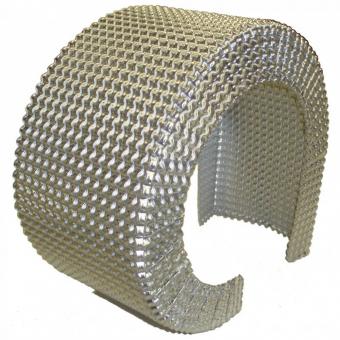
Embossing increases stiffness and helps prevent the panel from collapsing into the hot component. It can also reduce buzz/rattle and improve durability by distributing vibration loads.
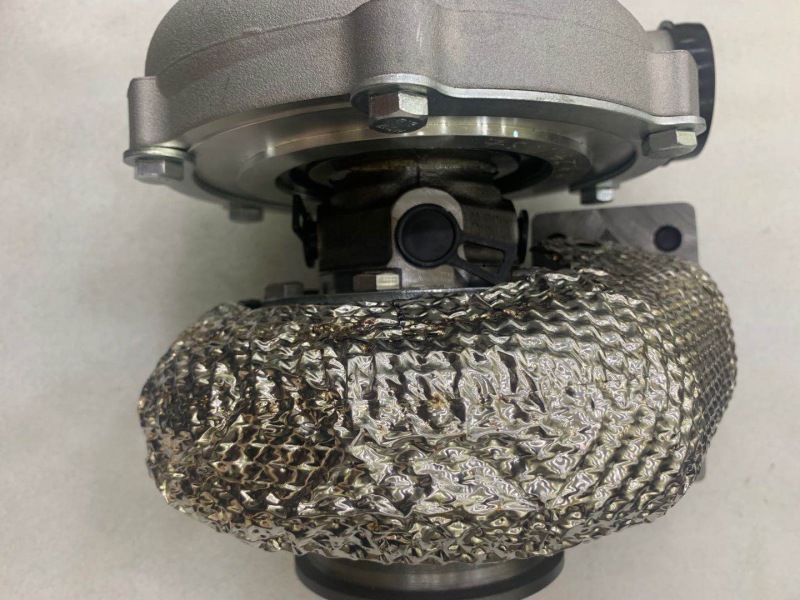
A single stainless sheet can reflect and block radiant heat. For more demanding zones, a multi-layer heat shield (stainless facing + insulation core + optional backing) can further reduce heat transfer where space allows.
Stainless selection is mainly about temperature severity, thermal cycling, corrosion environment (road salt, marine, chemicals), and required formability for stamped or formed shields.
| Stainless Grade | Choose It When… | Common Use Notes (Procurement-Friendly) |
|---|---|---|
| 321 Stainless | You need stronger performance under high heat and thermal cycling for exhaust/turbo zones. | Often preferred for more severe exhaust shielding than basic 304; good for formed/stamped heat shields. |
| 304 Stainless | The heat zone is moderate and you need a cost-effective, widely available stainless. | Good general-purpose grade; widely used for many heat shield sheets and formed panels where conditions are not extreme. |
| 316 Stainless | Corrosion resistance is a key concern (road salt exposure, marine environments, chemicals). | Chosen for harsh corrosion environments; may be specified even when temperatures are similar to other grades. |
| 430 Stainless | Cost is the priority and the application heat/corrosion conditions are lower. | Used in some lower-demand shields; validate temperature and corrosion expectations before selection. |
If your application regularly pushes beyond typical stainless shield limits, consider nickel alloys (e.g., Alloy 625) for the most severe turbo/downpipe heat zones: Alloy 625 (Inconel 625) Heat Shield .
Contact BSTFLEX (Send Drawing for Quote)
For many exhaust applications, 304 is a cost-effective choice. For higher heat and thermal cycling (especially near turbo/downpipe), 321 is commonly chosen. If corrosion resistance is the priority (road salt or marine exposure), 316 may be preferred.
Embossing primarily improves stiffness and helps maintain an air gap under vibration. Because a stable air gap is critical for radiant heat control, embossed designs can improve real-world performance and durability.
Single-layer stainless shields work well when space is limited and heat levels are moderate. Insulation-backed multi-layer shields are used when you need higher heat reduction and have enough packaging space to add an insulation core.
Share the application location, dimensions, preferred stainless grade (if specified), target quantity, and any drawings/photos. If you have temperature data or a target surface temperature, include it for faster material and structure recommendations.

No.10, Chuangxin North Road, Nanshan Park, Ningguo Economic and Technological Development Zone, Ningguo City, Anhui Province, China
Tel/Whatsapp : 0086-15856303740
Email : sales@bstbraidedsleeve.com
Skype : vanesa-cheng